



26
November
2026
|
10:50
Europe/London
What can Britain learn from China’s metro revolution?
Study of 37 Chinese cities finds that metro networks can help reshape where people live, with potential lessons for how the UK plans transport and urban growth
GettyImages-1096061864
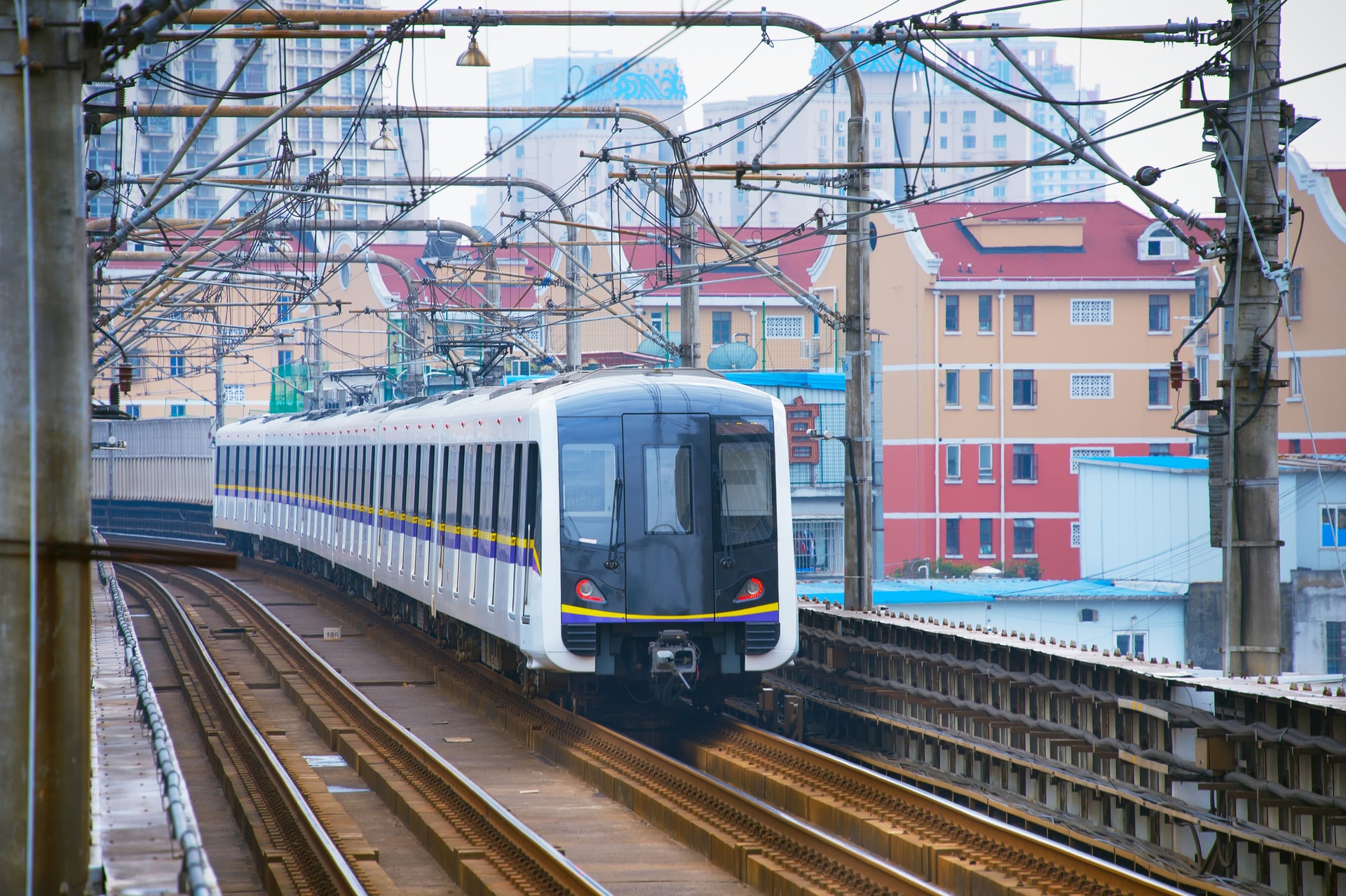
Subway train arriving to the station, Shanghai, China
As the UK considers how to improve public transport and accommodate growing urban populations, new research into China’s rapidly expanding metro networks has uncovered important lessons about how rail systems can shape the way cities develop.
A study by researchers at The University of Manchester working alongside academics from several Chinese universities examined 37 cities and more than 4,000 metro stations, finding that rail networks are associated with a more even spread of people across cities and stronger residential clustering around suburban stations beyond traditional city centres.
The findings highlight how transport infrastructure can influence not only how people travel, but also where they live - and why decisions about rail investment need to be considered alongside housing, jobs and local services.
Key findings
- Rail network coverage and scale shape cities in different ways: Total track length is more linked to how widely residents spread across a city-region, while station population coverage is more linked to lower concentration in the city centre.
- Suburban stations can support population growth: The further stations are from the city centre, the more they lift surrounding population density relative to wider areas at the same distance.
- Connectivity matters: Stations with better positions within the wider rail network tend to be more attractive to residents.
- The impact can change over time: The positive association between a station and surrounding population density is strongest in its earlier years of operation, weakening or reversing at older stations.
- Local amenities play an important role: Housing, workplaces, services and other features of the surrounding neighbourhood help shape population density around stations.
Planning transport and cities together
The research, which uses population data from China's 2020 national census, examined how metro systems relate to population density at two levels: across entire cities and in the areas immediately surrounding individual stations.
The researchers found that cities with more extensive rail networks tended to have flatter population density patterns, with less concentration in the urban core. At station level, the boost a station gives to surrounding population density tends to be stronger the further it is from the city centre.
However, the relationship is not simply a case of building a station and expecting people to move nearby. The research found that a station's position within the wider network, how long it has been operating and the characteristics of its surrounding built environment all matter.
The findings could offer useful lessons for UK policymakers and planners considering how new and existing rail infrastructure can support the development of cities beyond their centres.
The researchers suggest that transport planning should be closely integrated with decisions about housing, employment and local amenities. This includes taking a more joined-up approach to transport-oriented development, where a mix of homes, workplaces, shops and services are planned around accessible public transport.
In cities facing pressure on central areas, better-connected suburban neighbourhoods could help support a more balanced distribution of population. But the researchers stress that the priorities for rail investment will depend on each city's existing population patterns and development needs, such as whether the goal is to relieve an overcrowded city centre by connecting existing communities, or to extend tracks outward to guide new suburban growth.
“Our findings suggest that well-planned metro networks can help support population growth beyond traditional city centres, but the benefits depend on more than the presence of a station,” said Dr Haoyu Hu. “Its connections to the wider network, and the availability of housing, jobs and everyday services nearby, are all important.”
“
As the UK considers the future of its own transport networks, there are valuable lessons to be drawn from how cities elsewhere have approached the relationship between public transport and urban development.
Dr Haoyu Hu
„

Publication details
This research was published in: Landscape and Urban Planning
Title: Understanding the Role of Rail Transit in Shaping Urban Population Density Models: A Dual-Level Analysis of Chinese Cities at City and Station Levels
DOI: 10.1016/j.landurbplan.2026.105814
URL: https://www.sciencedirect.com/science/article/pii/S0169204626002380