



11
November
2026
|
12:00
Europe/London
Training the next generation of scientists
Three doctoral programmes are training more than 90 researchers across biocatalysis, AI and microbial engineering, connecting fundamental science with industrial application.
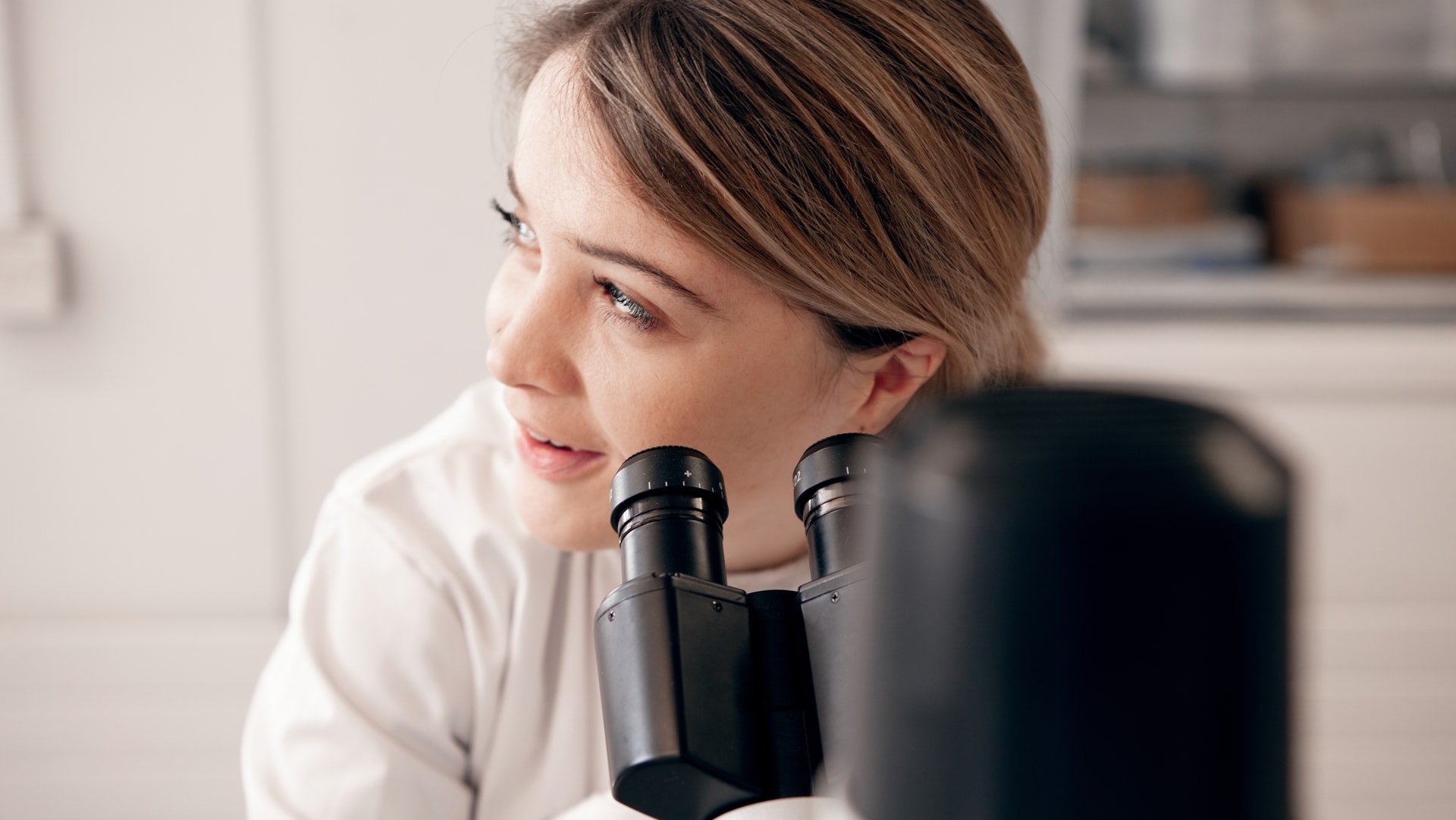
A researcher in a white lab coat alongside a microscope in a laboratory.
Developing the next generation of researchers with the scientific and interdisciplinary skills needed to translate biotechnology discoveries into real-world applications.
Summary
- Tomorrow’s biotechnology needs multidisciplinary researchers, able to connect biology and chemistry with engineering, AI, computation and data science.
- Three doctoral programmes involving The University of Manchester will strengthen the future skills pipeline, developing researchers equipped to tackle challenges across pharmaceuticals, sustainable manufacturing, health, food and the environment.
Bridging science and scale
Biotechnology increasingly depends on researchers who can work across disciplinary boundaries and translate discoveries into industrial processes.
Researchers need to connect biology and chemistry with engineering, computation and data science, while understanding what changes when a process moves from the laboratory towards manufacture.
Three doctoral programmes involving Manchester are creating cohort-based training around these capabilities, with strong links between universities and industry.
Three routes to impact
BioProcess develops expertise in biocatalysis and protein engineering, from enzyme discovery and AI-enabled optimisation through to industrial scale-up. Students are based across Manchester, York and Bristol and spend at least three months on company placement.
BioAID will train the next generation of scientists in AI-empowered biocatalysis, addressing critical challenges in the development of sustainable solutions for pharmaceuticals, agri-tech and clean manufacturing. Led by Queen's University, Belfast with co-leads including Professor Sam Hay from the Manchester Institute of Biotechnology, and the Universities of Edinburgh and Bristol.
- CODE-M focuses on engineering microbial cells and communities to address challenges spanning health, clean growth, food systems and the environment. Led by The University of Manchester, in partnership with the University of Liverpool.
Together, the programmes will fund more than 90 PhD places.
“
It's about giving researchers the expertise to turn breakthroughs in biocatalysis and protein engineering into technologies that can work at industrial scale.
Sam Hay, Professor of Biophysical Chemistry
„
