



23
November
2026
|
18:26
Europe/London
Honouring Ahmed Iqbal Ullah’s legacy and renewing our commitment to anti-racism
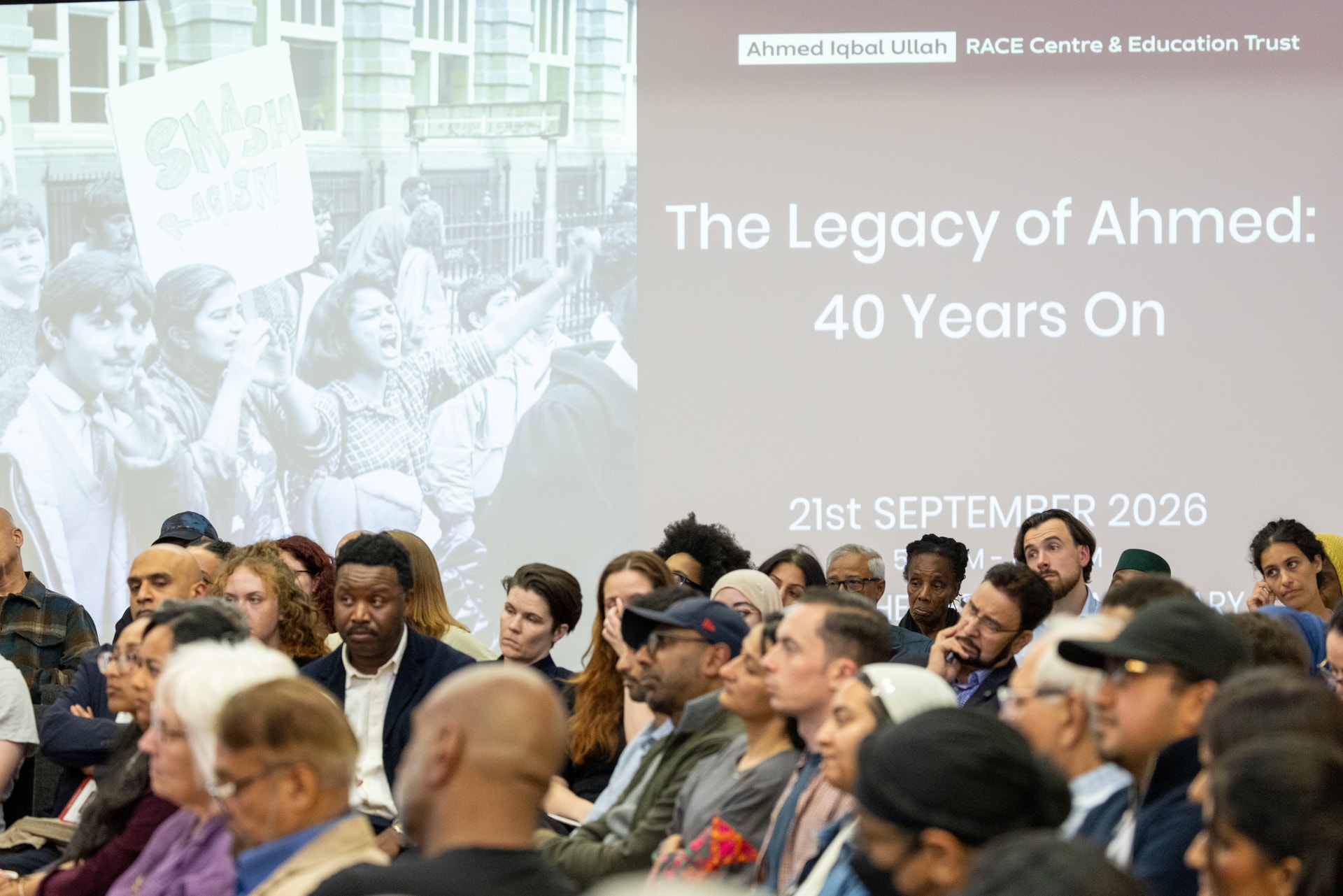
Forty years after the racist murder of Ahmed Iqbal Ullah, an event in Manchester brought together his family, communities, activists and civic and University leaders to remember Ahmed and reflect on the continuing struggle against racism.
_70A6422
The Legacy of Ahmed: 40 Years On was both an act of commemoration and a powerful reminder that the work inspired by Ahmed’s life and legacy remains as important today as ever.
Remembering Ahmed, looking to the future
Forty years on from the racist murder of Ahmed Iqbal Ullah, people came together in Manchester to remember Ahmed, honour his legacy and consider what that legacy asks of us today.
The audience included members of Ahmed’s family, University President and Vice-Chancellor Duncan Ivison, MPs Hannah Spencer and Afzal Khan, local councillors and, importantly, community members who remembered Ahmed’s murder and its impact.
Chaired by Ahmed’s sister and Ahmed Iqbal Ullah Education Trust Trustee Selina Ullah, the panel brought together people involved in the response to Ahmed’s murder in 1986 and those working with Global Majority communities today, particularly young people. Panellists included Professor Gus John, a member of the original Inquiry Panel and co-author of Murder in the Playground; Pervez Iqbal, Ahmed’s former schoolmate and an inclusive education activist; Tariq Mehmood, an anti-racist activist and leading defendant in the Bradford 12 case; Dr Shireen Sobhani, co-founder of Ananna; Zara Manoehoetoe, a youth worker with Kids of Colour; and Nika Muthra-Shah, Programme Director at Rekindle.
The panel explored the parallels between the challenges faced in 1986 and those confronting communities today, including racism, anti-migrant sentiment and Islamophobia. It also reflected on how Ahmed’s family, local communities and anti-racist campaigners responded to his murder, emphasising the continuing importance of community resilience and collective power.
Those attending recognised the power of hearing directly from Ahmed’s family, friends and activists. The event connected the history of anti-racist activism with present-day challenges and underlined the importance of the Centre and of continuing the work inspired by Ahmed’s legacy.
A particularly strong message from the event was the importance of young people, not simply as an audience for anti-racist work but as people who should be enabled to take a lead in it.
A living legacy
The Ahmed Iqbal Ullah RACE Centre is a specialist library and archive focusing on Global Majority histories, anti-racist activism, refugeeism and migration, and thinking about race and ethnicity. It works closely with its sister organisation, the Ahmed Iqbal Ullah Education Trust, whose work includes community-led collecting, oral history and engagement with local communities.
This partnership is central to what makes the work distinctive. Community-led collecting supported by the Trust enables histories and experiences to enter the archive, while the Centre makes the collections available for teaching, learning and research. Located within Manchester Central Library, the Centre brings together the strengths of the University, the Trust and its relationship with Manchester City Council, alongside the communities whose histories and experiences give the collections their meaning. Its location also helps make the collections accessible to people across Manchester.
This matters because archives are not simply records of the past. Community archiving helps ensure Global Majority histories are part of the city’s record, while engagement with those histories challenges their marginalisation.
That approach is also reflected in the Centre’s commitment to working collaboratively and respectfully with communities and ensuring that community perspectives and experiences are represented in its library and archive collections.
Our commitment through Imagine 2035
For The University of Manchester Library, this work is an important part of our future.
Imagine2035 recognises the RACE Centre as an important part of the Library’s anti-racism work and sets out an ambition for it to become a national hub for scholarship, education and community engagement. This means increasing the reach and use of the collections, strengthening community engagement and partnerships, supporting research and enabling more people to encounter, study and learn from histories that have too often been marginalised.
Our commitment is therefore both to protect an extraordinary legacy and to invest in what comes next. Current plans to refresh the Centre are being developed alongside Manchester City Council’s wider refurbishment of the Lower Ground Floor of Manchester Central Library.
Forty years after Ahmed’s murder, remembrance must sit alongside continued action. The anniversary event reminded us of what has been achieved through the commitment of Ahmed’s family, communities and anti-racist campaigners, but also of why this work cannot be regarded as finished.
By continuing to support the Ahmed Iqbal Ullah RACE Centre and Education Trust, and by working with our partners and communities, we are reaffirming our commitment to ensuring that Ahmed’s legacy continues to inform education, research, community engagement and the pursuit of racial justice for the generations that follow.
Find out more about the Ahmed Iqbal Ullah RACE Centre.