



Manchester, UK,
05
August
2026
|
14:27
Europe/London
Inspiring the next generation of scientists through hands-on discovery
Outreach-event-774w
As PhD researchers, much of our time is spent investigating complex scientific questions in the laboratory. However, one of the most rewarding parts of research is having the opportunity to share our passion for science with young people. Recently, three colleagues and I from the National Graphene Institute visited a local primary school to deliver a day of interactive science activities, designed to inspire curiosity, encourage creativity and demonstrate that science can be both accessible and exciting.
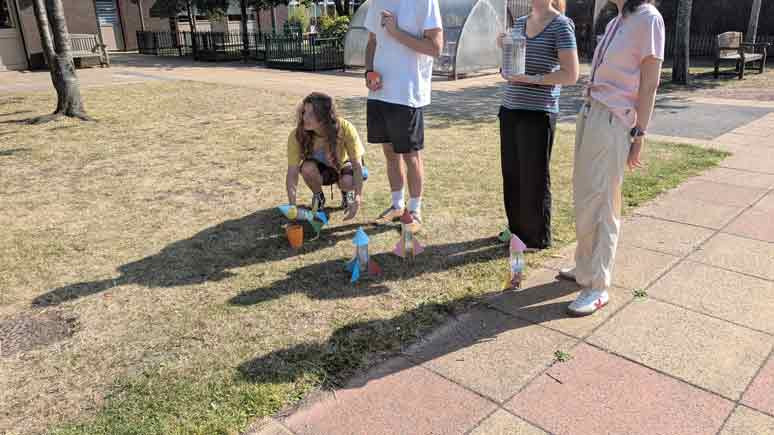
The day began with an energetic introduction to chemistry as pupils designed, decorated and built their own Berocca rockets. Using water bottles, water and Berocca tablets, they created rockets powered by the build-up of gas from a simple chemical reaction. After proudly showing off their colourful designs, the pupils launched their creations on the playground, with some soaring to impressive heights of around 10 metres. The excitement and anticipation before each launch made for a fantastic start to the day.
Next, the pupils explored the fascinating behaviour of liquids by creating colourful lava lamps using oil, water, food colouring and salt. As the salt carried coloured water through the oil before sinking to the bottom, the children observed how differences in density produce the characteristic "lava lamp" effect. It was a simple yet captivating experiment that encouraged pupils to think about the science behind everyday phenomena.
In the afternoon, the pupils split into groups, with each group carrying out one of three different experiments. One group built scribble bots using an electric motor, a cork and marker pens. The vibrations from the off-centre cork caused the robots to move unpredictably across the paper, producing unique works of art while introducing the principles of electric motors and engineering design.
graphite-drawing-1500x2666-2X
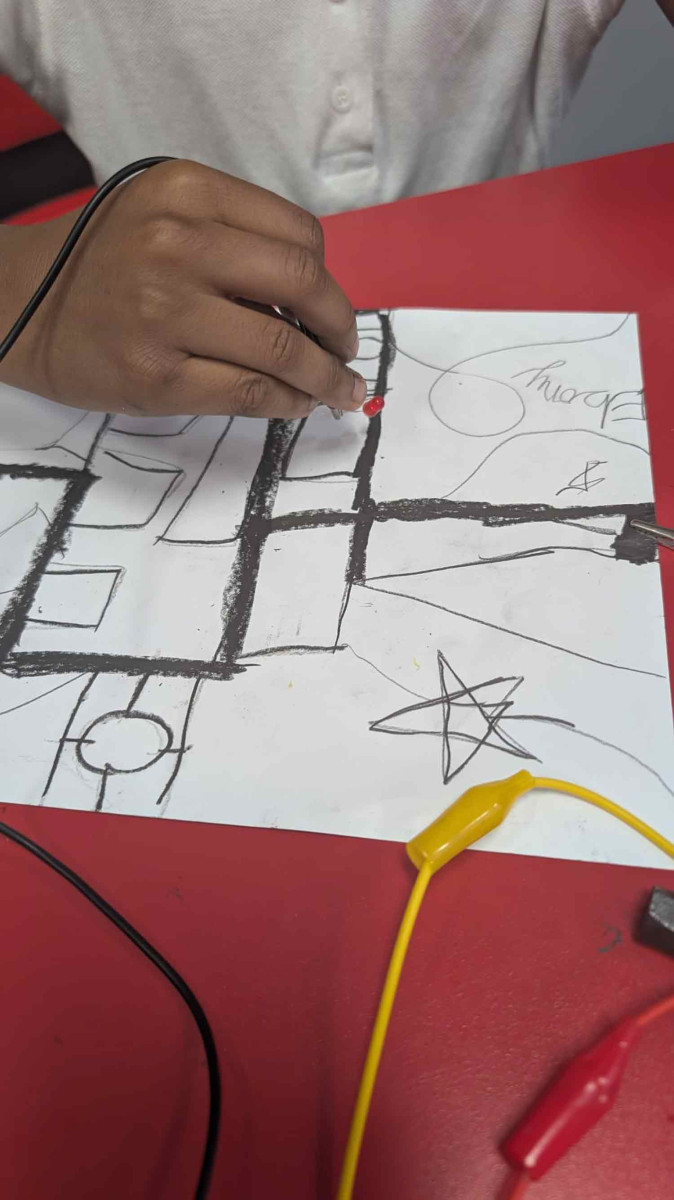
Another group investigated the electrical properties of graphite by drawing pictures with pencil and using the graphite lines to complete an electrical circuit. This activity was especially meaningful for us as researchers from the National Graphene Institute, demonstrating how graphite—and its remarkable single-layer form, graphene—can conduct electricity. The pupils also experimented with creating simple fruit batteries, using different fruits to generate enough electrical energy to power the circuit and illustrating how chemical reactions can be converted into electricity.
The final group carried out the ever-popular magic milk experiment. By adding food colouring to whole milk before introducing a drop of washing-up liquid, they watched vibrant colours swirl and dance across the surface. The striking visual effect provided an engaging demonstration of surface tension and molecular interactions.
To finish the day, the pupils took part in a careers fair with a difference. Each group presented the experiment they had completed to their classmates as they visited the different stalls, explaining the science behind their activity and answering questions from their peers. It was wonderful to see the pupils confidently communicate scientific ideas and take pride in what they had learned.
The enthusiasm, curiosity and confidence shown throughout the day were a reminder of the importance of science outreach. We hope the activities inspired the pupils to continue asking questions about the world around them and perhaps even sparked an interest in future careers in science and engineering. It was a privilege to represent the National Graphene Institute and share our passion for scientific discovery with the next generation.
Attendees
- Adam Rosillo (author/CDT student)
- Lucy Kendall (CDT student)
- Helena Amos (CDT student)
- Qian Guo (Postdoctoral Research Associate).