



10
November
2026
|
00:00
Europe/London
University–CyanLines Partnership Strengthens Community Engagement for Manchester’s Blue Green Network
The University of Manchester, through its Creative Manchester Research Platform, has partnered with CyanLines in a 12-month Innovation Fellowship, funded through Higher Education Innovation Funding (HEIF). The fellowship will be fulfilled by anthropologist, Dr Sarah O’Brien.
Screenshot-2026-09-22-103349-1024x596
The University of Manchester, through its Creative Manchester Research Platform, has partnered with CyanLines in a 12-month Innovation Fellowship, funded through Higher Education Innovation Funding (HEIF). The fellowship will be fulfilled by anthropologist, Dr Sarah O’Brien.
CyanLines is an ambitious partnership project supported by public and private sector funders, aiming to integrate blue and green spaces in Manchester. The vision is to connect the city’s canal paths, parks, rivers into an integrated and accessible network routes for walking, wheeling, cycling and running. In a bid to be a durable and relevant connected infrastructure, CyanLines seeks to develop this network with the different neighbourhoods bordering the routes, bringing together actors across the private, public and charitable sectors, as well as residents, commuters, community groups and grassroots organisations.
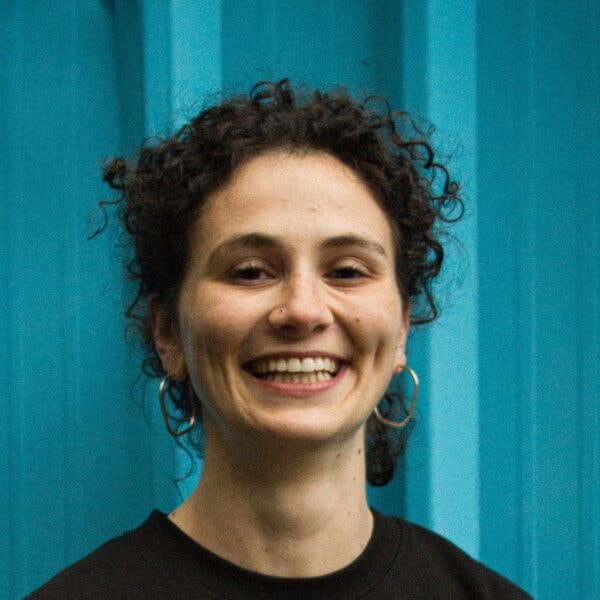
Dr O’Brien is an anthropologist who has worked on infrastructures, landscapes and future-making in areas of nuclear waste management in rural France and has also conducted ethnographic research on environmental activism in the UK, writing about truth and responsibility. She has experience in immersive qualitative research, interdisciplinary collaboration and participatory creative methods.
CloseUpObrien-600x600
Specialising in infrastructural ethics, landscapes and place-making, Sarah brings her ethnographic expertise and community engagement experience to CyanLines, building on her postdoctoral work with the Mimesis in Action research project in areas of nuclear decommissioning or nuclear waste management. Central to this research are interests in the ecology and sociality of landscapes, how people build identities and livelihoods with and through them, and in methodologies which experiment with imaginative future-making.
“
CyanLines is all about people, and their connection with nature, and the city. That’s just one reason amongst many why we’re really excited about this partnership with the University and the opportunity to work with our Innovation Fellow on a powerful programme of community engagement that really raises the bar on how we co-design our network of over 100 miles of nature. As a deeply organic and fast-growing programme, Sarah’s work over the coming months will in a very practical way help guide our conversations with people about nature, urban change, biodiversity and how we work across a really broad partnership to deliver a healthier and more resilient city.
Steve Connor, Cyanlines Programme Director
„

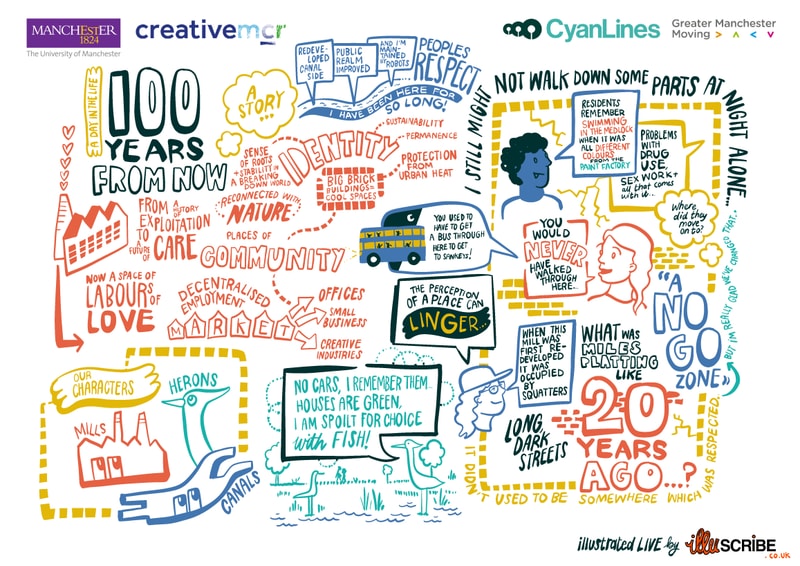
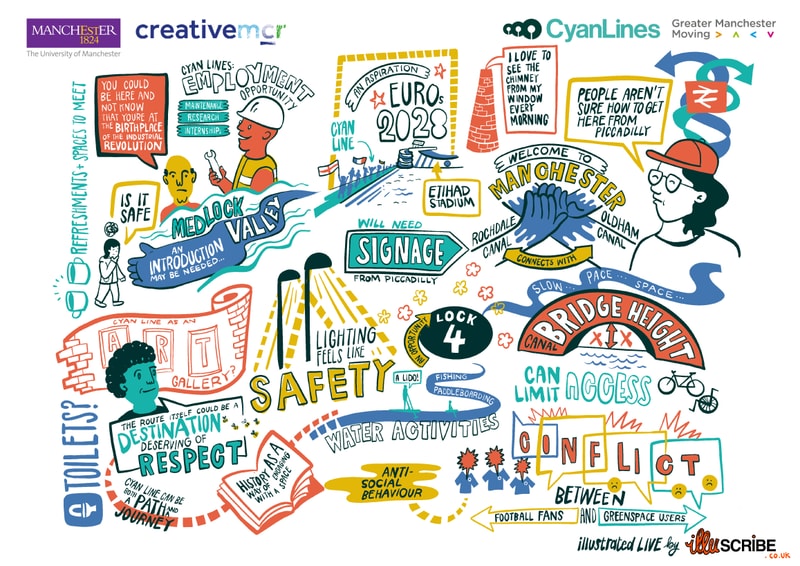
The 12-month knowledge exchange fellowship will allow Sarah to continue some of the work she started with CyanLines, in a pilot project earlier in 2026, whereby she started to explore community engagement around the proposed route CL 5, the “Piccadilly to the Etihad Campus loop”. A collaborative public workshop at Bridge 5 Mill in Holt Town resulted in rich conversations around ecological spaces, urban regeneration projects, accessibility and inclusion – beautifully captured by Illuscribe in the live illustrations below. This work emphasises that infrastructures and landscapes are not merely planned points in space: they are the socio-ecological relations and stories upholding them through time. Importantly, these stories and experiences include materials, humans, and other living beings, and they can tell us a lot about possibilities for the future.
“
We are delighted to be working closely in partnership with the CyanLines team and wider group of partners on this 12-month Innovation Fellowship.
A key part of our vision is creating knowledge for the public good, and we are delighted that through engaging with communities and local groups, University of Manchester research and knowledge exchange will inform where the next stage of CyanLines should go, creating more green corridors in areas of most need, for the greatest health benefits.
Professor Michelle Phillips, Director of Creative Manchester
„