



17
November
2026
|
12:55
Europe/London
Manchester scientist receives international awards for advances in AI and environmental science
Manchester scientist Dr Zhonghua Zheng has received two major international geoscience awards recognising his interdisciplinary research combining AI, environmental modelling and atmospheric science to address challenges including urban heat, air quality and climate resilience.
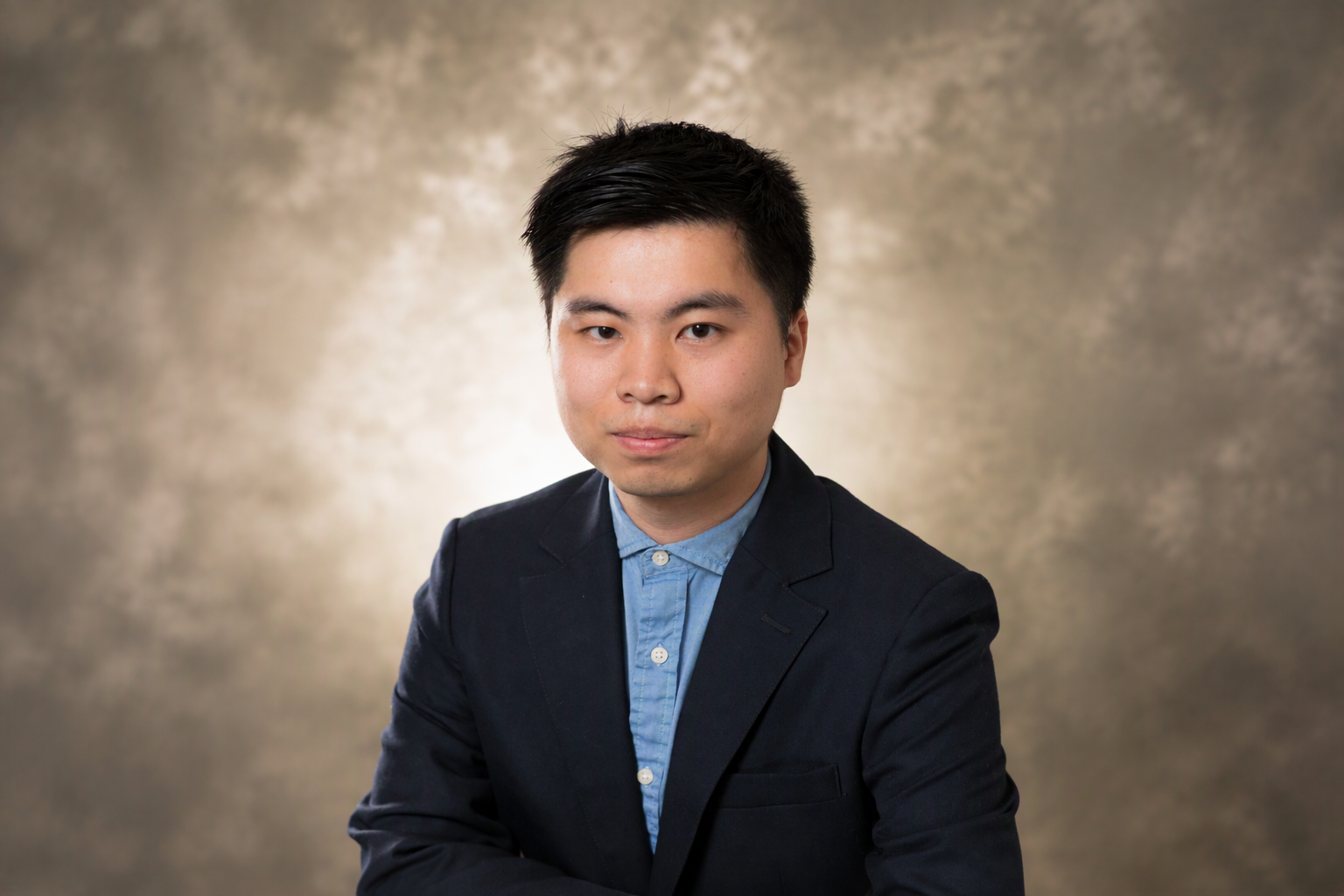
Studio portrait of a person wearing a dark jacket and blue shirt, photographed against a softly lit neutral background.
Dr Zhonghua Zheng is Co-Lead for Environmental Data Science and AI at the Manchester Environmental Research Institute.
Summary
- Associate Professor Zhonghua Zheng has received prestigious early-career awards from the European Geosciences Union and Asia Oceania Geosciences Society.
- His research combines AI with environmental science to improve understanding and modelling of urban climate, air quality and climate risks.
- His team is developing physics-guided AI approaches that can make complex urban climate modelling faster and more accessible.
- The awards follow his selection for MIT Technology Review’s 2026 Innovators Under 35 global list.
Dr Zhonghua Zheng has received two international honours from leading European and Asia Oceania geosciences societies in recognition of his interdisciplinary contributions to Artificial Intelligence (AI), atmospheric and environmental sciences.
Zheng has been named a recipient of a 2027 Division Outstanding Early Career Scientist Award by The European Geosciences Union (EGU) – the leading organisation for Earth, planetary and space science research in Europe with 23,500 global members.
Alongside, he has also been selected by the Asia Oceania Geosciences Society’s (AOGS) Atmospheric Sciences Section for its Kamide Lecture Award, which recognises scientific excellence among outstanding early-career researchers.
The two awards celebrate his contributions to urban climate, air quality, Earth system modelling and open scientific computing, and follow his recent selection for MIT Technology Review’s 2026 35 Innovators Under 35 global list.
Combining AI and environmental science to address global challenges
The awards are a response to Dr Zheng’s research exploring how urban environments respond to climate change. Through his work he has helped advance the representation of cities in Earth system models, helping scientists better understand urban climate risks and assess adaptation strategies. His group has also helped advance atmospheric chemistry and air quality modelling, investigating pollutants such as fine particulate matter and ozone and the impacts of wildfires on air quality.
More recently, his group has developed physics-guided AI approaches to accelerate urban climate modelling. Their research, published at NeurIPS 2025, one of the world’s leading AI conferences, demonstrated how advanced machine learning can incorporate physical knowledge to improve the simulation of urban climate processes.
Beyond these scientific advances, Dr Zheng has championed open science through cloud-based modelling platforms and open-source software, including pyclmuapp, making complex environmental simulations more accessible to researchers and students worldwide.
“
I am deeply honoured to receive these awards from two major international scientific communities. These achievements reflect the dedication and contributions of my group, collaborators, mentors and colleagues, without whom this work would not have been possible.
Our research aims to bring together advances in AI and process-based modelling to better understand urban climate and air quality challenges. By improving both the scientific foundations and accessibility of environmental models, we hope to support more informed decisions on climate adaptation, air pollution management and sustainable development.”
Dr Zheng, Associate Professor in Data Science and Environmental Analytics, Department of Earth and Environmental Sciences
„

Building on international recognition
The two geoscience awards follow Dr Zheng’s selection for the 2026 MIT Technology Review 35 Innovators Under 35 global list (TR35), which recognises 35 young innovators worldwide each year.
Following today’s news Dr Zheng will deliver an invited award lecture at the Asia Oceania Geosciences Society 2027 Annual Meeting in Singapore.
Strengthening Manchester’s research in sustainable cities and AI
The international recognition reflects The University of Manchester’s strengths in sustainability, Earth and environmental sciences and interdisciplinary AI research.
As Co-Lead for Environmental Data Science and AI at the Manchester Environmental Research Institute, Dr Zheng leads interdisciplinary research projects and international collaborations while training the next generation of researchers working across AI, climate science and environmental sustainability.
His work also aligns closely with the University’s Manchester 2035 strategy, including its emphasis on AI, climate resilience and translating research excellence into wider societal impact.