

Year of the Horse 2026
Celebrating Chinese and Lunar New Year, in Manchester and around the world.
Welcome to the Year of the Horse at The University of Manchester. Below you’ll find details of events, stories and reflections from across our community as we mark the new year celebrated through Chinese and Lunar New Year traditions, both in Manchester and around the world.
Whether you’re continuing long-held traditions or experiencing these celebrations for the first time, everyone is invited to take part.
What does the Year of the Horse represent?
In Eastern culture, the horse symbolises action, freedom and forward momentum. The Year of the Horse represents moving forwards – a time for confidence, motivation and embracing change.
Often associated with fresh opportunities and personal growth, it’s a year for moving boldly towards what comes next rather than standing still.
We have chosen to lead with reference to ‘Year of the Horse’ to remain focussed on the symbolism of the new year itself which is the common focal point for the celebration across all Eastern cultures; whether that be Chinese New Year, Lunar New Year or one of the many other cultural and regional variants.
Wishing you all a prosperous Year of the Horse
A New Year message from Professor Duncan Ivison, President and Vice-Chancellor of the University.
How to get involved
There are plenty of ways to celebrate Year of the Horse 2026:
- Join events across campus, the Students’ Union and the city.
- On Tuesday, 17 February find red envelopes hidden around campus and share the luck on social media.
- Spot our Chinese New Year lantern decorations in the Old Quad and share photos.
What’s happening for Year of the Horse 2026?
Explore the events taking place across campus, the Students’ Union and the city as we celebrate together.
On campus
When: 12 February, 12–3pm (drop-in)
Where: Arthur Lewis Common Room
A collaborative celebration for School of Environment, Education and Development and School of Social Sciences undergraduate and postgraduate students, featuring a Chinese calligraphy workshop delivered by the Confucius Institute.
When: 17 February, 2–4pm
Where: The Nest, Students’ Union building
Try traditional lion dance techniques in this interactive taster session. A fun opportunity to learn the basics of this energetic and symbolic Lunar New Year tradition.
When: 18 February, 4–8pm
Where: Manchester Museum
An evening of performances, including a traditional lion dance and a special collaboration with the Hong Kong Plucked String Chinese Orchestra.
Visitors can also take part in arts and crafts workshops and see live demonstrations of Su embroidery and traditional woodblock New Year prints.
When: 18 February, 6–10pm
Where: Manchester Academy 3
Celebrate Chinese New Year in the heart of Manchester with a vibrant, hands-on cultural experience open to all students.
What’s included:
- Dumpling Making Workshop – learn and enjoy a classic festive dish.
- Spring Festival Calligraphy Scroll – write Chinese New Year blessings using a writing brush.
- Ang Pao Lucky Draws – celebrate luck, fortune, and surprises!
- Food and drinks – enjoy festive flavours throughout the event.
Come eat, drink, dance, create and celebrate the Lunar New Year together!
When: 19 February, 1.10–1.50pm
Where: Martin Harris Centre
Presented by the University's Music Department and the Confucius Institute, this special concert celebrates Chinese New Year with solo pipa, viola and a world premiere pipa quintet performance. Followed by a public composition workshop at 2.30pm.
When: 20 February, 6–10pm
Where: Red Chilli , 403 Oxford Rd, Manchester M13 9WG
A celebratory dinner at Red Chilli featuring Chinese cuisine, lucky draws and prizes for best-dressed attendees.
When: 20 February, 4–6pm
When: The Nest, Students’ Union building
Create your own traditional lantern in this hands-on workshop and learn about its significance in Lunar New Year celebrations.
When: 22 February, 6–8.30pm
Where: Manchester Club Academy
A collaborative celebration featuring Mahjong, board games, traditional crafts (fortune cookies, calligraphy, Chunlian couplets), interactive games with prizes, food and drinks, plus a raffle ticket included with entry.
Tickets available via society Instagram accounts:
@echoes.ofchina_uom | @uom.abacus | @mmu.abacus | @lang_soc
When: 23 February, 7–9pm
Where: Union Hall Evangelical Church, M15 6DY
An evening of origami, a panel discussion and short talk exploring the meaning of Chinese New Year, plus snacks and time to socialise. Whether you’re curious about Chinese culture, faith, or just want a cosy space to connect with others, everyone is welcome!
- Origami workshop led by a member of the Chinese Christian Church.
- Panel discussion and short talk by Ben on the meaning and blessings of Chinese New Year, thoughtfully linked to the gospel, 'What Chinese New Year Means to Me'.
- Snacks provided.
- Time to chat, socialise and meet new people.
When: 23 February, 5:30–7:30pm
Where: Manchester Academy, M13 9PR
Open to all students and the public.
Come along to Manchester in Translation for talks and literary translation workshops into and out of Chinese – non-Chinese speakers welcome and no experience required.
Aimed at anyone who is interested in or curious about literary translation, this event will begin with a short talk in English on literary translation, followed by two Chinese translation workshops to celebrate International Mother Language Day.
When: 24 February, 5–7pm
Where: Students’ Union Theatre
The Students' Union and the Manchester China Institute are delighted to present this one-off event. Join us to explore the importance of Chinese student voices on campus, accompanied by a relaxed networking session with Chinese dishes.
When: 25 February, 2–4pm
Where: School of Arts, Languages and Culture (SALC) Hub Space
A Lunar/Chinese New Year celebration featuring a variety of cultural craft activities. Open to SALC students and anyone interested in celebrating.
When: 27 February, 5:30–7pm
Where: Little Yang Sing
An interactive celebration dinner at Little Yan Sing for Manchester Friendship Programme students (not open to the public).
When: 1 March, 3–10pm
Where: The Stoller Hall
A large-scale cultural celebration featuring a Spring Festival cultural fair (3–7pm, free entry) and a ticketed evening gala (7–10pm) with traditional and contemporary performances in addition to the stage performances, the evening will include a large-scale prize draw with more than 70 prizes, distributed across different ticket categories, providing an interactive and engaging experience for attendees.
In the city
When: 13 February, 5–10pm
Where: St Mary’s Church, Stockport
A free evening of authentic Asian street food, comfort dishes, live music and relaxed New Year celebrations in a historic church setting.
When: 4–15 February
Where: Market Street, Exchange Square and New Cathedral Street
A vibrant city centre celebration featuring Cantonese opera, music, dance, lion dances with eye-dotting ceremony, themed game stalls and a bamboo wishing installation.
When: 15 February, 10am–3pm
One of Manchester’s most anticipated Lunar New Year events, featuring a giant dragon procession through the city with dancers, drummers and acrobats.
When: 15–22 February
Beginner-friendly workshops rooted in Eastern art traditions, delivered by Floating Art. A chance to explore new materials and creative techniques.
How our students celebrate
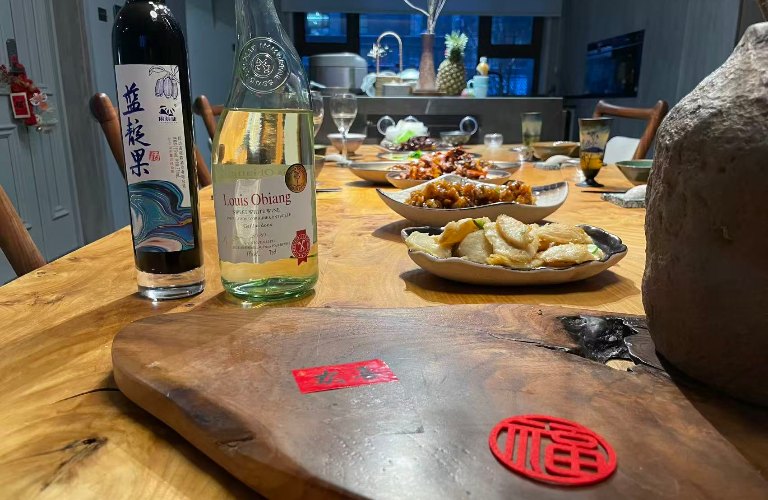
Students across the Manchester community celebrate the New Year in ways shaped by their culture, family and tradition – often centred on reunion, reflection and renewal.
“I usually celebrate it through family reunions and the New Year’s Eve dinner, alongside traditional customs such as exchanging red envelopes, setting off firecrackers, and displaying Spring Festival couplets, which symbolise good fortune and renewal.” Says En He, a third-year BSc Computer Science and Mathematics student.
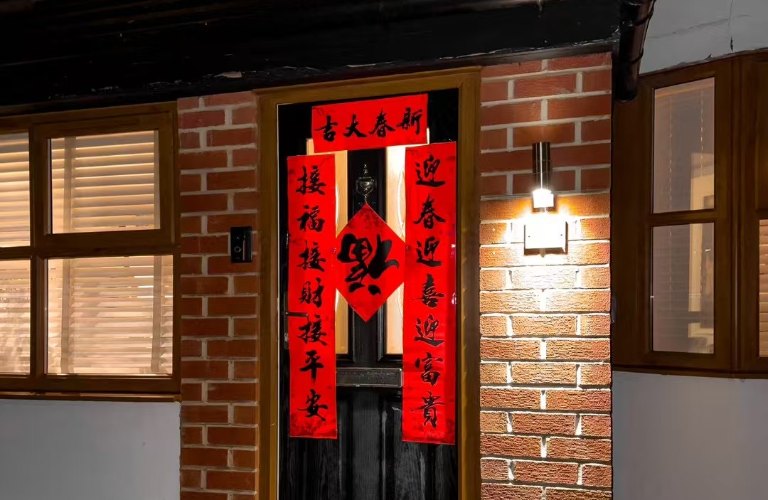
“Different provinces in China have their own celebration traditions – dumplings are the classical food; northern Chinese love noodles while southern Chinese prefer new year cake!” says Lingxi Hu, a first-year BA Politics and Arabic student.
“We celebrate [Tết Nguyên Đán – the Vietnamese New Year celebration] by gathering with family, cleaning houses to banish bad luck, and honouring ancestors. Traditional foods vary by region: the North features Bánh Chưng (square sticky rice cake) and peach blossoms, while the South enjoys Bánh Tét (cylindrical cake) and yellow apricot blossoms (Mai)." says Hoang Dang, a first-year PPE student.
Across the various celebrations, these shared moments of family, food and reflection connect students across cultures in Manchester and around the world.