04
September
2026
|
08:30
Europe/London
Department Hosts the 19th Annual Political Networks Conference
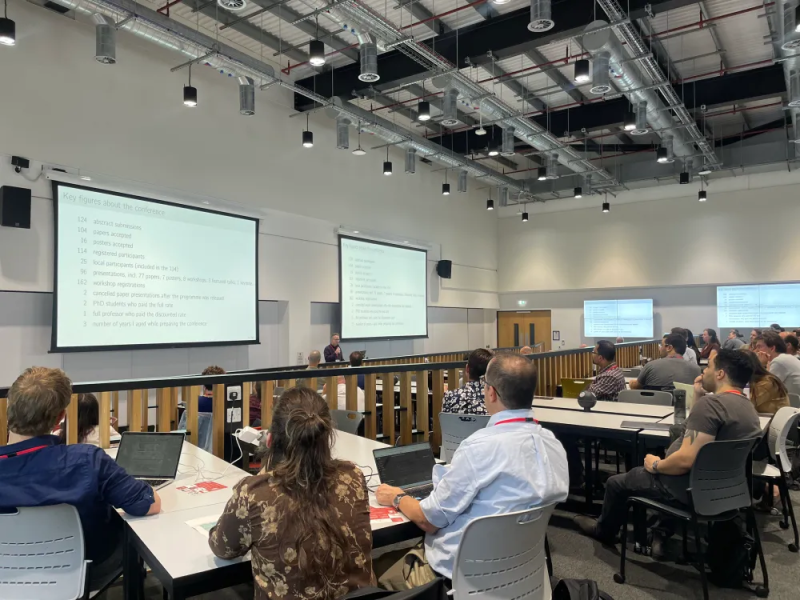
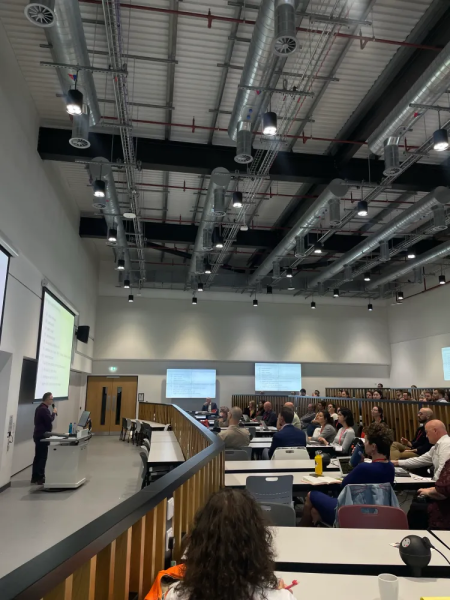
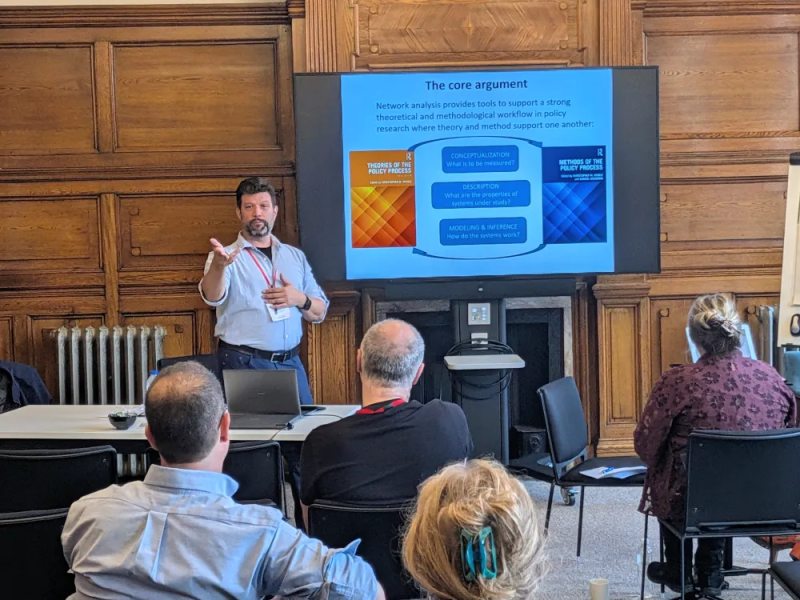
From 4–7 August 2026, the University of Manchester welcomed international scholars to Oddfellows Hall for the 19th Annual Political Networks Conference (POLNET 2026), hosted and organised by Professor Philip Leifeld(Department of Social Statistics).
Marking the first time the premier international conference has taken place in Europe after previous iterations at Harvard, Duke, Michigan, and other universities, the event brought together leading researchers and practitioners from across North America, the UK, Europe, and beyond.
A Vibrant Programme of Methods and Research
The four-day conference showcased cutting-edge methodological developments and empirical applications in political network analysis:
114 participants attended across the four days.
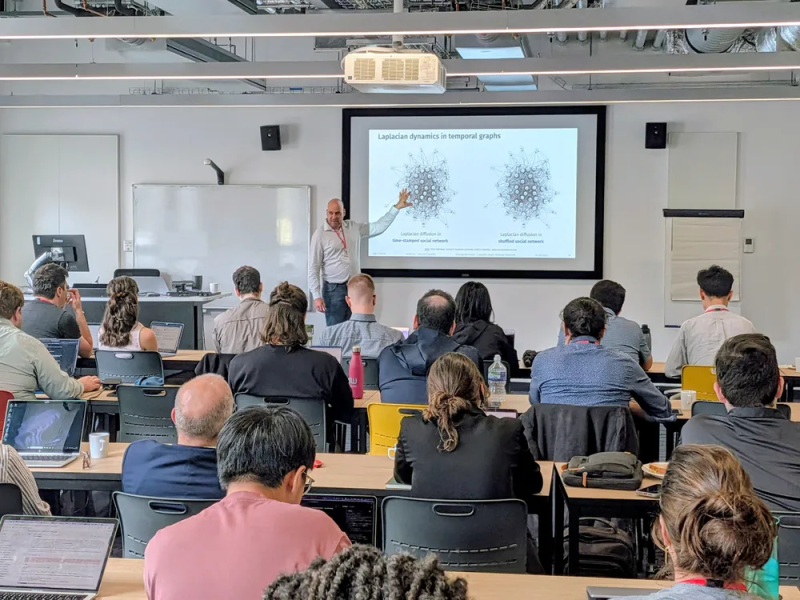
96 research presentations were delivered across 30 sessions in 4 parallel panel tracks, spanning topics from policy networks and political polarization to international relations and online discourse.
8 intensive training workshops took place over the first two days, covering introductory and advanced network analysis in R, causality-aware temporal networks, deep graph learning, data collection and management, and statistical modelling.
Featured sessions included a mentoring lunch, workshops with senior academics, and a publishing panel with the editors of Network Science, where a dedicated special issue for the conference is hosted, and Nature Human Behaviour.
Strong Local Engagement and Institutional Partnerships
The event saw substantial local participation, with 25 attendees from the University of Manchester taking part thanks to conference stipends provided by the Cathie Marsh Institute for Social Research (CMI). North American graduate students were supported by 10 APSA travel grants sponsored by the APSA Political Networks Section.
The conference was organised in partnership with the Department of Social Statistics, the Mitchell Centre for Social Network Analysis, the Cathie Marsh Institute for Social Research, the APSA Section on Political Networks, the ECPR Standing Group on Political Networks, and the International Network for Social Network Analysis (INSNA). Generous support was provided by the University of Manchester's Hallsworth Conference Fund, the Mitchell Centre, and the CMI.
For full access to session abstracts and the conference archive, visit the POLNET 2026 website.