



14
September
2026
|
09:00
Europe/London
Spotlight on: Creative Manchester Director Professor Michelle Phillips
Professor Michelle Phillips has now commenced her role as the new Director of Creative Manchester and Professor of Music in the School of Arts, Languages and Cultures at the University of Manchester.
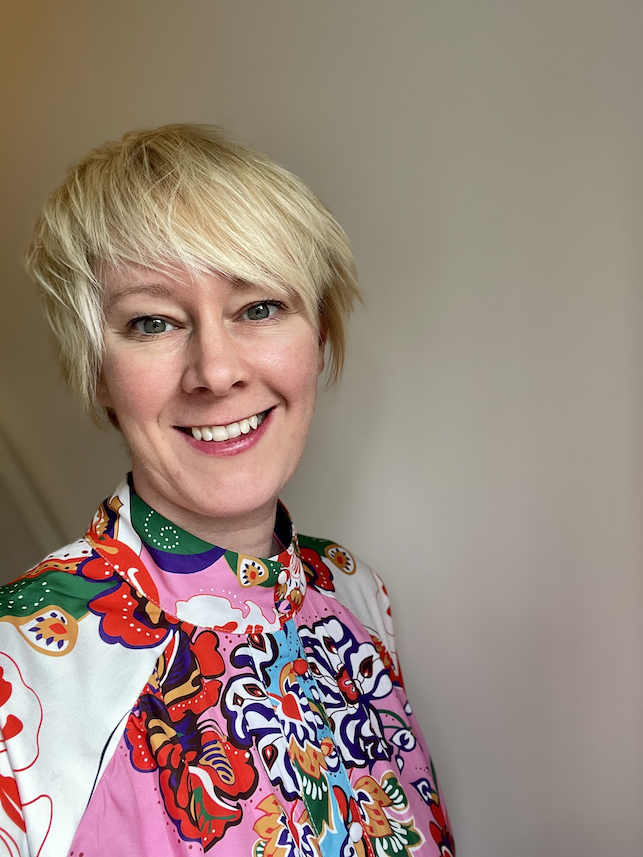
Michelle Phillips
As Director, Professor Phillips leads the strategic direction and development of the University’s Creative Manchester interdisciplinary research platform, bringing together academics, cultural partners and communities to advance creative research, practice and innovation.
Michelle brings considerable research and creative industry engagement experience to the role. Her research practice explores audience response to live and recorded music, neurological response to music listening, music and time, perception of contemporary music, entrepreneurship, and music and Parkinson’s disease.
To find out more about Michelle and her research, we sent her some questions and learned about her career to date, what culture has inspired her recently, and her love of bubble tea:
What attracted you to the role of Director of Creative Manchester and what excites you most about joining Creative Manchester at this point in its journey?
I’m really excited about this role, and have been warmly welcomed by you all at Creative Manchester! I know that I have big shoes to fill after John’s term, and I hope I can do the job that the marvellous Platform, the fantastic team, and the University deserve.
Creative Manchester is a shining beacon of everything that gets me up in the morning - innovation, interdisciplinarity, partnerships and collaboration, and place-based research that is relevant and impactful. I’ve loved being part of some Platform events including a panel of creativity and AI, and on ‘The science and politics of togetherness in music’ as part of the ‘Neither Factory Records nor Madchester’ event at Jodrell Bank last summer, and attending multiple others. We often fall into working in disciplinary silos, but I find that putting knowledge into boxes - for example, the arbitrary arts and sciences divide - is often unhelpful, and can prevent us from developing really exciting and truly groundbreaking ways of doing and seeing things. Expertise comes from all corners, and the Platform’s work across the University, city and beyond, embraces that.
The Creative Manchester Platform is in such a brilliant place, having thrived thanks to John, Anne-Marie, and the whole team. What excites me about joining at this time is the chance to build on this, and find opportunities ahead to experiment, explore, bring different people together in new ways, and think about how to do meaningful work that can feed into future research, practice and policy.
For colleagues and partners who may not know you yet, could you tell us a little about your background and what has shaped your career?
I grew up in Doncaster, Yorkshire where I was lucky enough to benefit from the kind of free music education that is sadly rare these days. I found my home and tribe in music and musical theatre. I studied music and German at the University of Nottingham, and (after a stint training as a chartered accountant with KPMG) then a PhD in music, maths, and time perception in the Centre for Music and Science at the University of Cambridge.
I was at the Royal Northern College of Music between now and then, for 16 wonderful years, where I was involved in running the undergraduate programmes, and leading the entrepreneurship training for students. I chaired the national subject association for music (MusicHE, formerly NAMHE) and ran a multi-million pound project across performing arts universities to explore how we can best prepare arts graduates for freelance careers.
My research is in the area of music psychology, and in particular, what makes a live music experience special (using behavioural, neurological and physiological methods), and how music can help people living with Parkinson’s. UKRI featured my work in this area as part of their ‘101 jobs that change the world' video series a few years ago.
I have longstanding and treasured collaborators in psychology, neuroscience and chemistry at the University of Manchester, and look forward to meeting lots of other researchers with similar interests.
My favourite kind of research is with interdisciplinary teams and industry partners, and is designed from the starting point of what people need. I’ve soaked up any opportunity to work with people across Greater Manchester, whether that has involved co-designing the Science and Industry’s exhibition ‘Turn It Up: The Power of Music’, or running a project which matched up composers and people living with Parkinson’s to write new pieces of music together. I was very proud to win the I Love Manchester Alan Turing Award last year, which ‘honours the boldest problem-solvers in Greater Manchester, individuals and organisations using fresh ideas and forward thinking’, and to be nominated for a ‘Northern Power Women’ and a ‘Women of the Year’ Award this year.
I live in Salford with my husband and our two boys aged 12 and 10, who keep us busy with board games, video games and Dungeons and Dragons. I also spend time playing tenor and baritone saxophone with my good friends in the Equinox saxophone ensemble, and enjoy serving as one of two Editors-in-Chief of the journal ‘Psychology of Music’.
As you begin your tenure, what are some of the priorities you hope to focus on during your first year?
I find the University’s ‘From Manchester for the World 2035’ strategy very inspiring, and the motivation to ‘build things that matter’. It champions everything that I believe a university should, with its focus on innovation, impact, collaboration, questions of what knowledge and skills our age demands and what changes lie ahead, and the aim of turning ideas into action locally and globally. I love the idea of building and nurturing solid foundations, whilst also leaping into new spaces.
It’s fantastic to see the Platforms woven throughout the strategy, and my priorities, along with being shaped by John’s advice and legacy, and the wisdom of the Creative Manchester team, are in line with that: bridging gaps between people and teams within and external to the University and making new links to create exciting future partnerships and projects. My focus is also on furthering and creating new links between Creative Manchester, teaching and supporting new partner-enabled learning initiatives, and mobilising people and resources to create new ways of thinking and doing to turn discovery to impact, and ultimately make the world a better place.
What role do you think creativity can play in addressing some of society's big challenges?
Universities have a job to do, and it’s an urgent one. There are huge challenges and problems in the world. As powerhouses of knowledge and skills, universities need to have an impact, and to make the world a better place for everyone. I think we’re failing if we don’t seek to do that every day.
Creativity is about finding new ways of doing things. We are organisations full of passion and motivation, of new knowledge and perspectives from all backgrounds and from all around the world. We’re a microcosm of brilliant collaborators who can put our heads together, with our friends in industry and in our cities and regions, to tackle the problems that people are facing. Working together as teams of people with different backgrounds, cultures, languages, perspectives and ways of seeing and being in the world, we can do so much more than alone as individuals. Just thinking about this makes me excited - we can make such a difference finding innovative ways to do and think about things, together.
Are there any books, exhibitions or cultural experiences you've enjoyed recently that have inspired you?
I’m an avid reader, and recently have loved George Saunders’ ‘Vigil’, Douglas Stuart’s ‘John of John’ and Lee Yuri’s ‘Broccoli Punch’ (translated from the Korean by Amber Hj Kim). Recent musical highlights have been Mika live at the AO Arena, and RNCM Artist of the Year pianist Liana Storey playing Rachmaninov’s ‘Rhapsody on a Theme of Paganini’ at the Bridgewater Hall.
An experience that will stick with me for a long time was a visit to the ‘Birds’ exhibition at the Mauritshuis in The Hague earlier this year. I was blown away! I’d mainly wanted to see ‘The Goldfinch’ (especially given how much I love Donna Tartt’s wonderful novel of the same name), but the exhibition was so much more than that moment. Taking up only one room, the exhibition includes not only Leonardo da Vinci’s sketches of flying machines, and works by Rembrandt, Picasso and Emin, but also pieces which invite visitors to question their relationship with birds and the natural world; a video of a Greenpeace campaign which depicts a ballet dancer covered in oil whilst performing the ‘dying swan’, and documentary footage showing how chicks are farmed in factories. For me it was everything an exhibition should be – beautiful, stimulating, and provocative.
Creativity means different things to different people. What does creativity mean to you?
I see creativity very broadly. Everyone is creative. For me, creativity is about making new ideas that have value for others. That value can take many forms - cultural, social, community, economic, environmental or value in terms of representation or health and wellbeing. I think we risk limiting what impact we can have and what new knowledge we can make if we see some people as creative and not others, or if we see value from one point of view only, e.g., if we see financial value as the main or only motivator for an idea.
Quick fire:
Coffee or tea?
Either! Can I add bubble tea to the list and choose that?
- A cultural event you're looking forward to this year?
Two cultural events I’ve waited for took place over summer - the release of Nintendo’s ‘Splatoon Raiders’ (I’m a big video gamer) and the announcement of the Booker Prize long list (something I look forward to every year!). I’m now really looking forward to the Manchester Literature Festival event with Russell T Davies and Bernardine Evaristo on 11th Oct - two cultural heroes of mine.
- What's on your playlist right now?
My ‘favourites’ streaming playlist has 218 tracks on it and I’m always looking for new things to listen to. My latest playlist additions are ‘You got me singing’ by Leonard Cohen, ‘Ko’u I Noa’ for solo viola by Lanzilotti, and ‘Django (live)’ by The Oscar Peterson Trio (from an album of live recordings never previously heard until their release earlier this year).
One word that describes your vision for Creative Manchester?
Innovative.