



09
October
2026
|
09:00
Europe/London
Teach Economics celebrates successful first year as programme expands to new regions
The Teach Economics programme, delivered by The University of Manchester in partnership with the Bank of England, is celebrating the successful completion of its first year, with 18 teachers from across North-West England completing the pioneering professional development programme.
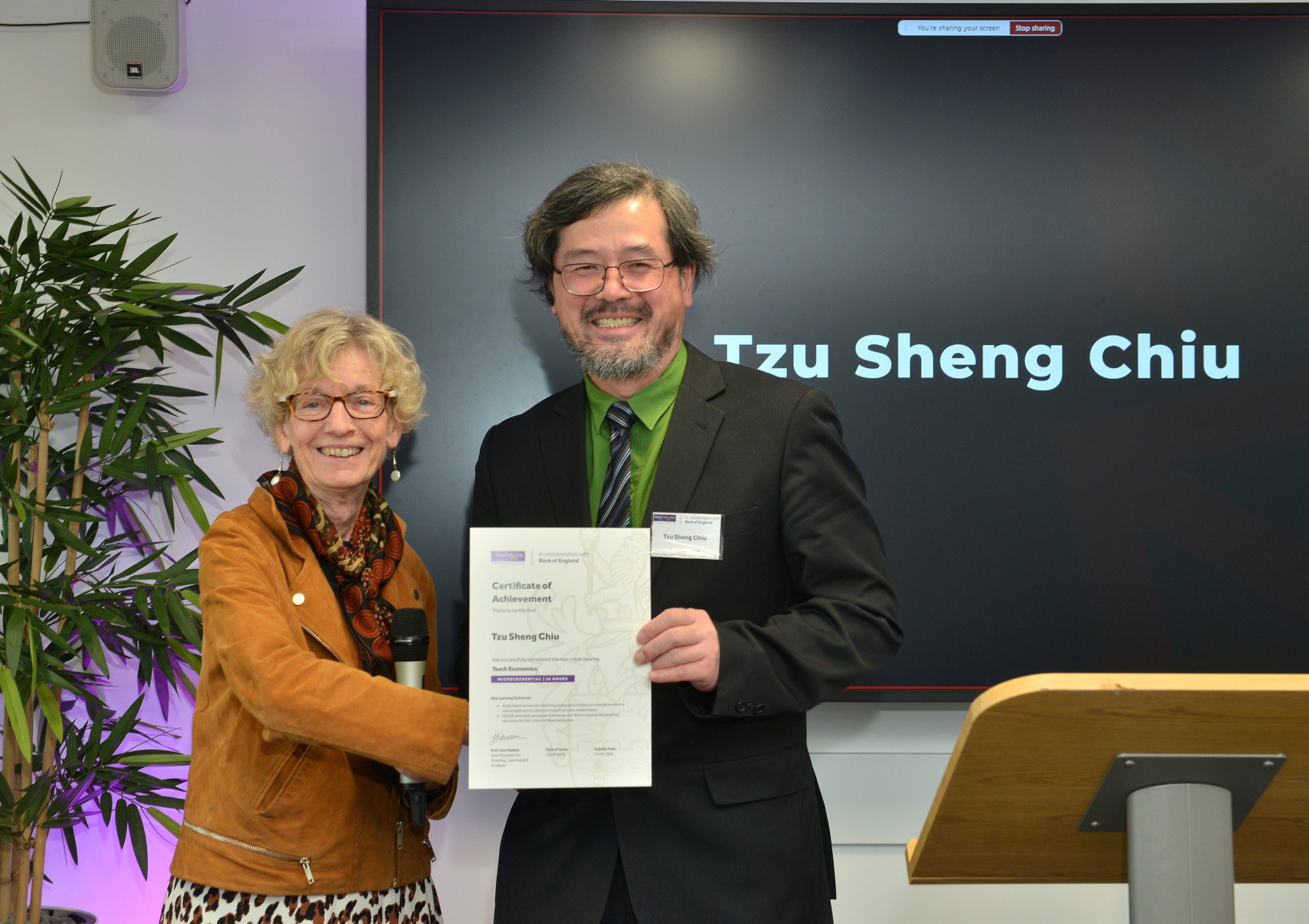
Tzu Sheng Certificate for Bank of England
Tzu Sheng Chiu receiving certificate of acheivement from Catherine L Mann
Summary
- First cohort of teachers recognised at University of Manchester celebration event
- Partnership with the Bank of England helping widen access to economics education
- Programme expands across selected regions in England and Wales in 2026/27 ahead of a UK-wide rollout in 2027/28
The first cohort was recognised at a special celebration event on 24 September 2026, where participants received certificates marking the completion of the year-long programme. The event will also welcome the programme's second cohort as Teach Economics enters an ambitious new phase of growth.
Created in response to a shortage of specialist economics teachers and uneven access to economics education across the country, the programme supports qualified teachers to develop the knowledge, skills and confidence needed to teach A Level economics alongside their existing subject specialism. The training is provided at no cost to participating teachers or their schools.
Following a successful first year in North-West England, the programme is expanding significantly during the 2026/27 academic year. Teachers from selected regions across England and Wales will be able to take part, extending the programme's reach to more schools and colleges. A UK-wide expansion is planned for the 2027/28 academic year, creating even further opportunities for teachers and students to benefit from the initiative.
The programme was launched following research commissioned by the Bank of England and undertaken by FFT Education Datalab, which highlighted significant disparities in who studies economics. The research found striking differences in participation by region, socio-economic background, school type and gender, despite economics becoming increasingly popular in recent years.
Research findings showed that students in some regions are substantially less likely to study economics than those in London, while disadvantaged pupils continue to be underrepresented in the subject. Around 70% of economics students are male, highlighting ongoing challenges in widening participation.
“
Teach Economics is creating opportunities for both teachers and their students. We are proud to be working with the Bank of England to widen access to economics education and ensure that more young people, wherever they live, can benefit from studying this important subject.
Professor Angela Davies, University Academic Lead for Lifelong Learning
„

“
The shortage of economics teachers has been evident for several years, but only recently has the Bank's research identified 'cold spots' in the country where fewer comprehensive schools and colleges offer economics, such as the North East. Teach Economics aims to both boost economics teacher supply in these areas and diversify the range of students who take economics. A large number of entries at A level remain male students from London and the South East who study in selective schools or the independent sector.
Bob Hindle, Academic Lead, The University of Manchester and Bank of England Teach Economics programme
„
“
Economics matters because it helps us make sense of the world around us, from the cost of living and interest rates to the impact of climate change. Through the Teach Economics programme, the Bank of England's partnership with the University of Manchester is helping to equip more teachers with the knowledge and confidence to bring economics into classrooms that may previously have had little access to the subject. By expanding opportunities to study economics, we can reach a more diverse range of learners, ensuring that talented young people from every background can see themselves in the subject and the varied careers it can lead to.
Catherine L Mann, External Member of the Monetary Policy Committee
„
“
The Teach Economics programme has given me the confidence and expertise to teach economics more effectively, while fitting around the demands of a full teaching workload. Learning directly from experts at The University of Manchester and the Bank of England has been invaluable, helping me bring new insights into the classroom. Most importantly, it has strengthened my belief that every young person should have the opportunity to study economics and the chance to pursue the opportunities it can create.
Jo Newton, Business Studies Teacher, Sandbach School
„
The celebration event brought together teachers, University colleagues, Bank of England representatives and education partners to recognise the achievements of the inaugural cohort and explore the opportunities ahead as the programme continues to expand. The programme's second cohort will begin their studies during the 2026/27 academic year.