
Advancing cross-border innovation in cancer detection
An international partnership with clinicians and communities co-designed a mobile screening model that is detecting oesophageal cancers earlier – while building trust, training and diagnostic capacity across Kenya.
At a glance
- Co‑design grounded in what local clinicians, community workers and government said mattered most.
- Outreach and training built through honest conversations about fear, stigma and practical barriers.
- Iterative testing refined what worked in rural and underserved counties.
- Insights from international partners now shape approaches to early detection in Greater Manchester’s Black communities.
How the impact happens
Working with clinicians, community health workers and health leaders, the international research team defined the problem together: oesophageal cancer is almost always diagnosed too late to treat. Since then, hundreds of health workers have been trained, the mobile endoscopy truck has reached five Kenyan counties and screened thousands of participants, and knowledge and skills continue being shared across borders.
From the outset, the partnership agreed that meaningful change would depend on shared ownership rather than importing an external model. “When we started this work, I was clear about one thing: it would only succeed if it was genuinely co-created. We couldn’t take a cancer detection model from Manchester and drop it into Kenya without our Kenyan colleagues showing us the way forward that worked for them,” Professor Rob Bristow remarks. That commitment guided everything that followed.
Community health workers played a central role in reshaping outreach and training, changing how cancer was discussed and who led those conversations. Their guidance on cultural beliefs, fear surrounding the word ‘cancer’ and everyday barriers helped the team understand why early screening rarely happened. These insights fed directly into how training was delivered and support was structured locally. “What made this work was shared design. Community health workers, clinicians, researchers and government partners all shaped how the mobile screening model would function,” Professor George Njoroge from Kenyatta University Teaching/Referral and Research Hospital says, noting that decisions felt owned by those who would implement them.
Shared vision, sharing skills
Back in Manchester, a Train-the-Trainer programme welcomed Kenyan doctors and pathologists, supporting them to build expertise and then teach others on their return home. “We trained a small number intensively and trusted them to lead,” says Rob, “Seeing one person become ten, and then twenty, was a turning point.” This training cascade model allowed the initiative to grow without overwhelming already stretched clinical services, while keeping leadership rooted locally.
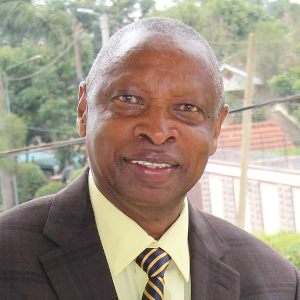
“What made this work was shared design.”
Professor F George Njoroge
Chief Scientific Officer
Kenyatta University Teaching/Referral and Research Hospital
More than 400 clinicians have now been trained as well as around 500 community health assistants and almost as many community promoters. Digital tumour boards and shared data systems enabled real-time collaboration across borders, allowing clinicians to address knowledge gaps and adapt practice during early implementation.
When screening began, communities were prepared. “Seeing the first mobile unit reach communities – and people queueing to be screened – was a powerful moment,” George recalls, “It showed that trust, training and partnership can translate evidence into action.”
Early cancers were detected, screening surged and a model built on shared purpose began transforming access to early diagnosis.
.jpg)
A queue for cancer screening in Kenya.
Moving forward
The international team is now focused on embedding early detection into national systems, collaborating with the Kenyan Ministry of Health to explore how mobile screening could be expanded sustainably. Training, referral pathways and community engagement are being developed in parallel, recognising that early detection only works when treatment pathways are ready. George agrees: “One challenge was ensuring early detection didn’t create fear or false hope. That required close coordination with government, so treatment pathways were in place before screening began.”
Alongside service development, genomic analysis of collected samples is expected to generate new insights into the causes of oesophageal cancer in East Africa. Understanding cancer biology there will also help clinicians refine risk assessment and therapeutic strategies for patients of Black and African ancestry in the UK too.
The University of Manchester continues to support long-term capacity-building, including a PhD initiative that enables Kenyan clinician researchers to train in Manchester in cancer diagnosis and contextual systems design.
And thanks to the reciprocity of the partnership-centred approach, insights from engagement – including a shift to talking about time‑to‑reach groups and adapting language to reduce fear – are now being applied with partners such as Can‑Survive UK. This is shaping confident early‑detection outreach in Greater Manchester, building on the North West’s existing mobile screening experience.
Meanwhile, Rob reflects on how the collaboration reshaped his own approach to research: “This collaboration changed how I work. It required letting go of complete control and supporting Kenyan colleagues to lead decisions on engagement, data and dissemination.”
The result is not just a screening model, but a way of working that centres trust, shared leadership and learning across borders.
Explore how this approach could connect with your work
If you’re interested in collaborating, learning more or understanding how this kind of research impact is supported at The University of Manchester, email the Research Impact Team at impact@manchester.ac.uk to start a conversation.
Meet the team
This work was shaped by many people across research, practice and partnership. The individuals featured here reflect just some of the roles that made it possible.
-(1).jpg)
Professional support teams also made invaluable contributions to this work, from ideation and funding support, through to project delivery and partner engagement.
Continuing the impact
- This work was funded by the National Institute for Health and Care Research (NIHR).
- Find out more about the Kenyatta University Teaching, Referral and Research Hospital.
- Explore our Healthier Futures research.
- Support more work like this through our Challenge Accepted campaign.