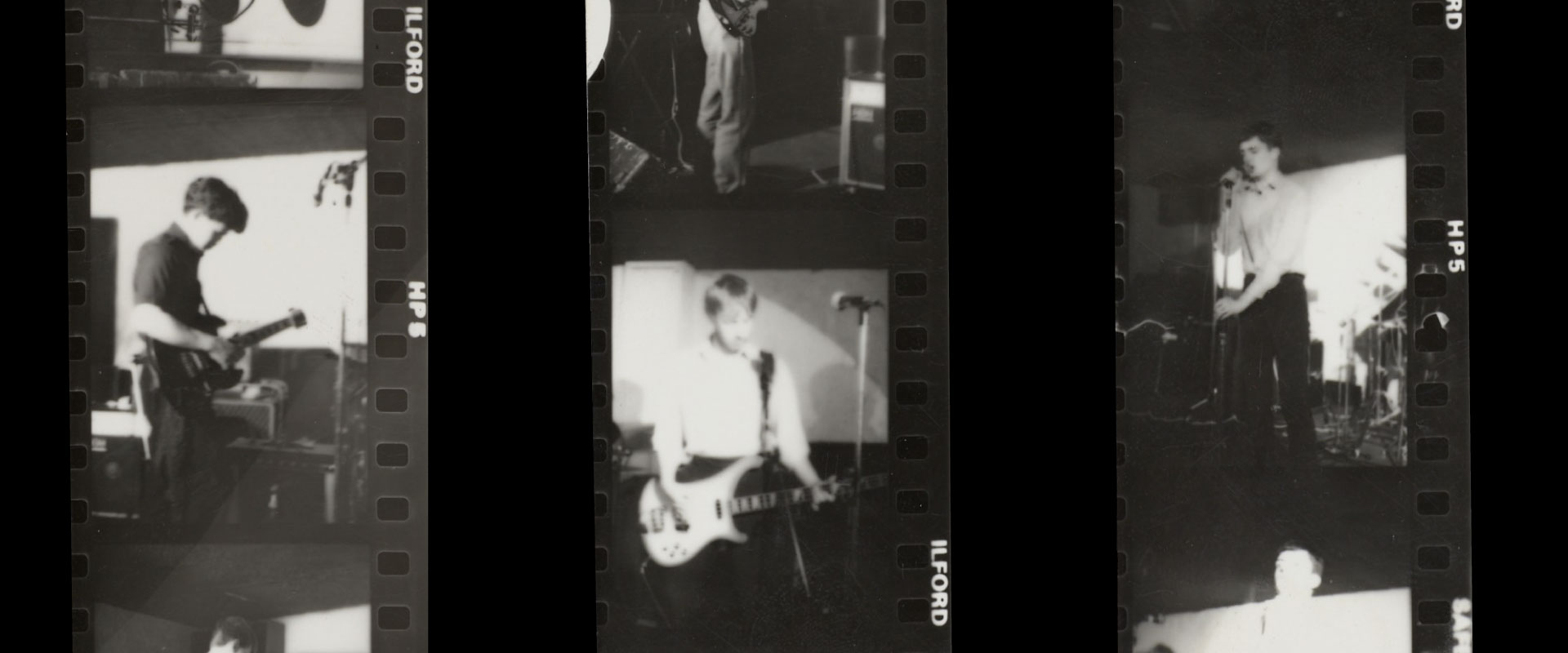
The Insight exhibition signals the University’s role as international custodian of popular cultural heritage, connecting – through the British Pop Archive – Manchester’s revered musical history to audiences around the world.
“Hopefully the archive helps to show who the real Ian Curtis was – and removes elements of the myth."
Mat Bancroft, curator of the British Pop Archive (BPA) at The John Rylands Library, is speaking ahead of the launch of Ian Curtis: Insight, a major exhibition in New York displaying rare and never-before-seen items from the personal archive of Joy Division’s iconic frontman.
The summer 2026 exhibition at the Voltz Clarke Gallery in New York’s Lower East Side not only shared with the world ephemera from the University’s BPA – an ever-growing national collection celebrating the global importance of UK popular culture – but also unveiled a perhaps lesser-known side to the enigmatic Curtis, a seminal Manchester figure who took his own life aged just 23.
It uncovers, Mat explains, Curtis’s correspondence with and deep connection to the band’s devoted fans: “He writes about gigs he’s going to and records he’s just bought. It’s clear he sent them badges and stickers… it’s something that might surprise people.”
It shows you his lived experience through that time. How he’s feeling and the emotional and personal battles and experiences he’s having.
A closer look
Insight reveals how Curtis penned detailed, personal responses to those who wrote to him and, perhaps contrary to the popular image of a melancholic young man, depressed and disillusioned with his surroundings, “to some extent seems very positive about lots of things in his correspondence”.
The exhibition includes a large selection of Curtis’s handwritten lyrics to Joy Division songs, on paper and in notebooks, and lifts the curtain – just slightly – on the creative process of one of post-punk’s most mysterious figures. “They show a lot of working out, of working in the margin. There are lines crossed out; there are lines you know are going to change for the recorded version.
“It shows you his lived experience through that time. How he’s feeling and the emotional and personal battles and experiences he’s having.” The collection features Curtis’s written work, song ideas, titles, prose and short stories, as well as photographs, posters, flyers and other material likely to have influenced the young songwriter, including his book and seven-inch record collections. The exhibition also draws on the archives of Joy Division manager Rob Gretton; Factory Records co-founder and ‘Mr Manchester’ Tony Wilson; music photographer Kevin Cummins; and more.
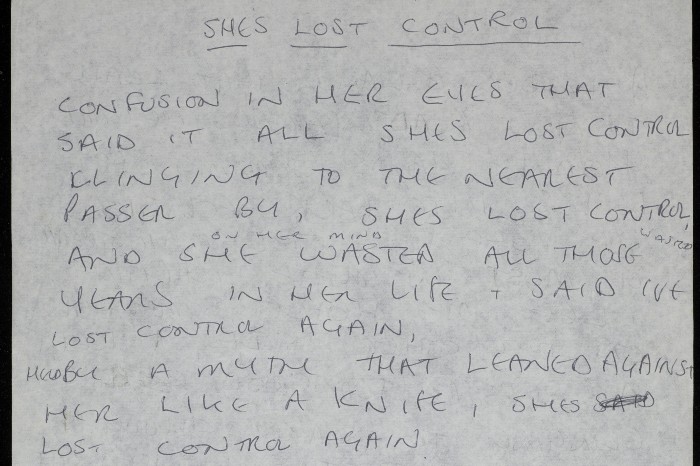
Handwritten lyrics to 'She's Lost Control' by Joy Division, Ian Curtis, 1979. Image courtesy The University of Manchester.
An energising atmosphere
Insight paints a fuller picture of not just Curtis’s impact on the world, but Manchester’s. The city’s unique pop cultural history is a reason, Mat explains, why people of all generations – himself included – came and still come to Manchester to study, a “cultural hotbed” where “you could rattle off 15, 20 bands, artists and singers who have been both successful and important. They’ve influenced UK music and, in lots of cases, have gone global”.
“Every year the University has this mass influx of people from all over the world, who bring a new energy and regenerate the city in a small way. Manchester has a ‘can-do’ attitude that encourages people to go and do what they want, be creative and try to make it."
Curtis died in 1980, on the eve of Joy Division’s first North American tour. Insight coincides with what would have been his 70th birthday and the 50th anniversary of the band’s formation.
The exhibition presents an opportunity for fans old and young, near and far, to connect with Curtis and the band in a new way. To explore – through the BPA and its telling of the rich, unfolding story of UK popular culture – a remarkable archive of intimate scribblings, thoughts and ideas, and glimpse a revered performer’s creative process.
“It’s just pen on paper at the end of the day,” Mat reflects, “… but obviously, it’s much more than that.”
Discover how to support culture and community at Manchester.