



19
November
2026
|
07:00
Europe/London
Manchester Institute of Biotechnology celebrates 20 years of research and innovation
The Manchester Institute of Biotechnology marks 20 years of bringing scientists and industry together to turn fundamental research into new technologies, medicines and more sustainable solutions.
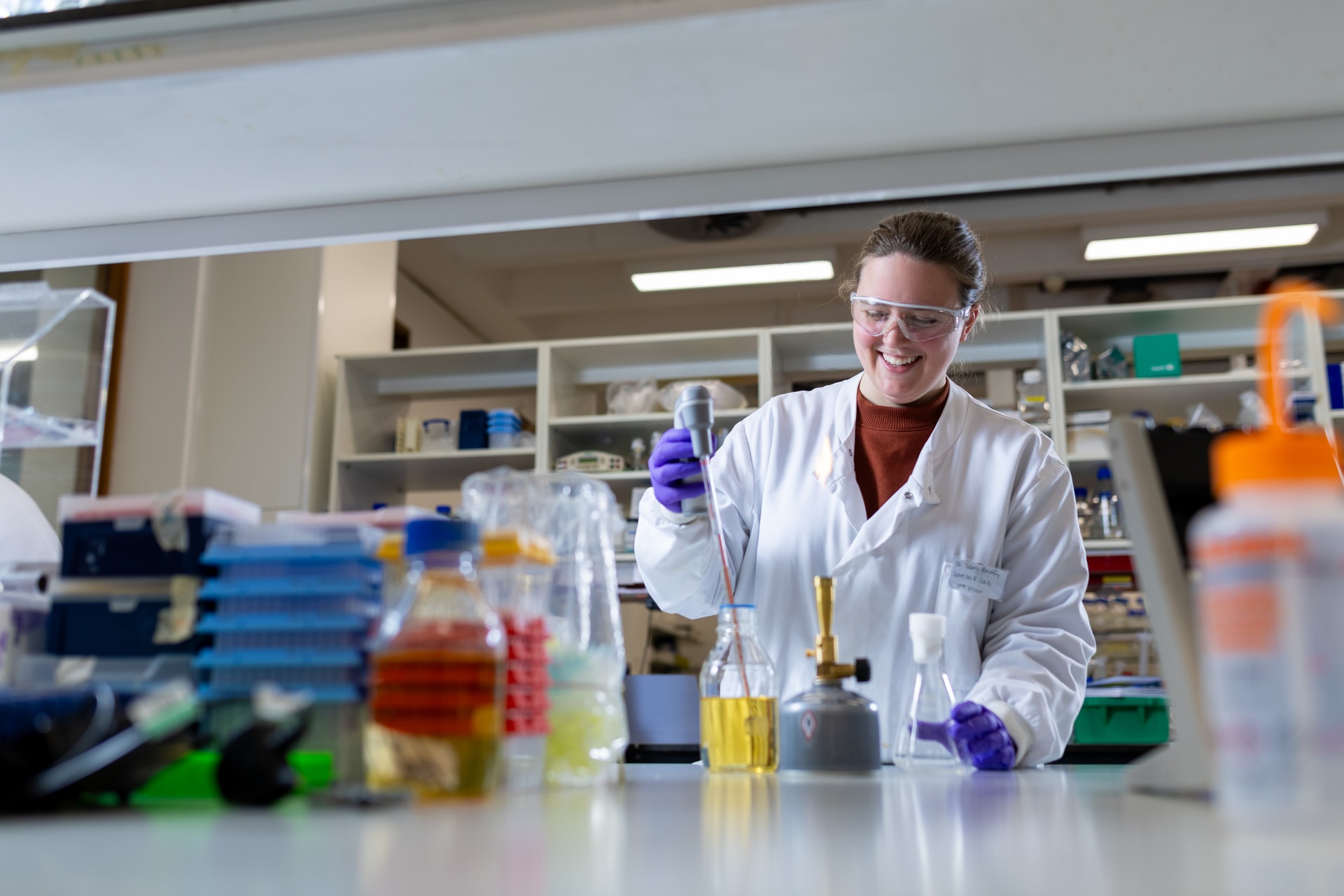
A researcher wearing a white lab coat, safety glasses and purple gloves uses laboratory equipment at a bench surrounded by bottles and containers.
Research at the Manchester Institute of Biotechnology is exploring enzyme-based alternatives to conventional chemical methods for manufacturing therapeutic oligonucleotides.
The University of Manchester’s Manchester Institute of Biotechnology (MIB) is marking its 20th anniversary, celebrating two decades of research and innovation in biotechnology for health, sustainability and the environment.
The Institute grew out of a vision developed at UMIST in the late 1990s to bring biology together with Manchester's established strengths in the physical sciences and engineering. Backed by major investment, that vision led to the creation of a £38 million purpose-built interdisciplinary research centre, designed to bring together researchers and industry from across biology, chemistry, engineering and computer science.
Opening in 2006, originally as the Manchester Interdisciplinary Biocentre, it brought scientists, shared technologies and specialist facilities under one roof, laying the foundations for two decades of scientific discovery, industry partnerships, spin-out companies and researcher training.
Today, MIB has grown into a community of around 400 researchers across more than 40 research groups, with more than £120 million in live grants and approximately 200 research publications each year.
Its research has also helped create 16 commercial companies, alongside longstanding partnerships with industry.
Built on collaboration
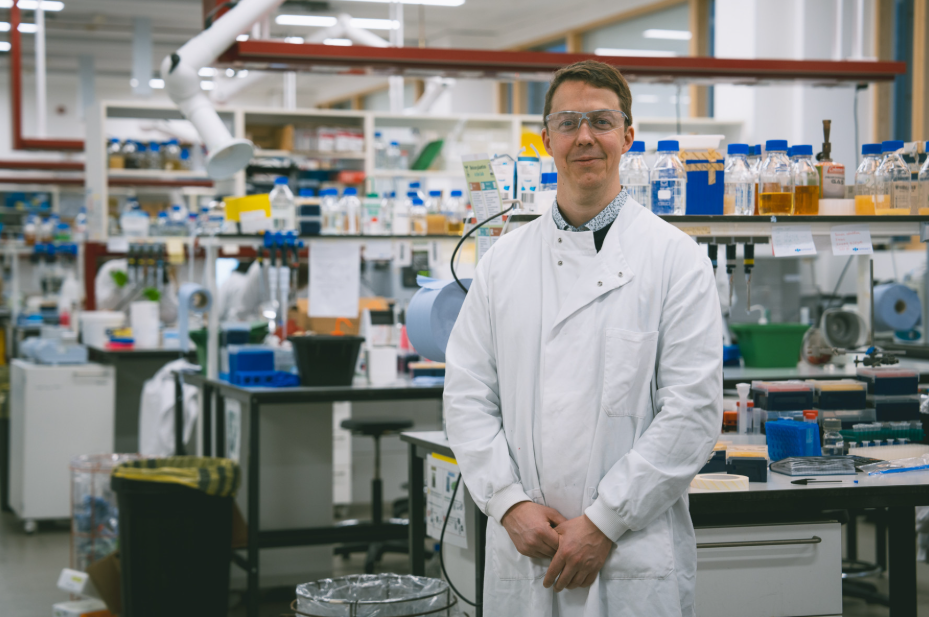
Professor Anthony Green
Professor Anthony Green, Director of MIB, said the Institute’s success has been built on bringing together researchers with complementary expertise and providing a multidisciplinary environment to tackle large, ambitious challenges.
“This collaborative approach extends to industry, too. We have a very open and productive dialogue with our industry partners who help shape our research and training programs, ensuring that we continue to address real-world challenges. That’s one of the things that makes MIB so special.”
Over the last 20 years, MIB researchers have combined fundamental biological discovery with practical applications, developing more sustainable ways to produce chemicals and materials, engineering biological solutions to problems including pollution, plastic waste and carbon emissions, and pioneering new approaches to producing and delivering advanced medicines.
Professor Green added that ability to make new fundamental discoveries while also addressing real-world problems remains central to the Institute’s approach.
“We work well at the interface between fundamental science and industry-relevant translational research. Both aspects are equally important to our research strategy and we’re fortunate to work in a field where we can make contributions across the innovation pipeline.”

The University of Manchester Parkinson's Disease research team
Among its success stories is work inspired by Joy Milne, who noticed a distinctive odour associated with Parkinson’s disease. Researchers developed a skin-swab approach to study chemical differences in sebum, using mass spectrometry. The research has involved more than 7,000 participants and is informing development of a potential non-invasive test that could detect the disease seven years before symptoms appear.
In research supported by the Gates Foundation, MIB scientists are developing low-cost biomanufacturing routes to key Global Health drugs, to make these therapeutics more accessible to the global population. In recent work, the team have developed new biocatalytic methods to efficiently produce lenacapavir, a highly effective, long-acting HIV-prevention medicine whose manufacturing cost remains a barrier to wider access. The team has engineered enzymes that can efficiently produce a key component of the drug and is now exploring whether AI could offer a faster way to design the enzymes needed for its manufacture.
From research to industry
MIB’s impact also extends beyond individual research discoveries. The Institute has helped develop skills, businesses and industrial capability around biotechnology, supporting researchers to move ideas from the laboratory towards commercial and industrial applications.
One example is the Centre of Excellence for Biocatalysis, Biotransformations and Biocatalytic Manufacture (CoEBio3), which combined research with industry-focused training and helped establish Manchester as a major centre for industrial biocatalysis. Its researchers have commercialised more than 1,000 biocatalysts, with enzymes used at industrial scale and technologies developed with international pharmaceutical companies.
That expertise has also helped create new businesses. MIB spin-out C3 Biotech, for example, is developing ways to manufacture chemicals from low-value waste rather than fossil-derived raw materials. At its pilot plant in Stockport, the company has demonstrated continuous production for more than six months, producing more than 100kg of an intermediate that can be converted into the acrylic material PMMA.
Building the next generation
As MIB enters its third decade, it is investing in the people, skills and partnerships that will shape the future of biotechnology, from training the next generation of researchers to supporting businesses and creating new companies.
The Manchester Biomolecule Engineering Centre (MBEC) provides hands-on training in technologies spanning molecular design, laboratory automation, analytical characterisation and structural biology. Researchers and industry professionals can work alongside specialists before taking the techniques and expertise back to their own laboratories.
Manchester is also involved in three doctoral programmes that will train more than 90 researchers across biocatalysis, AI-enabled biotechnology and microbial engineering.
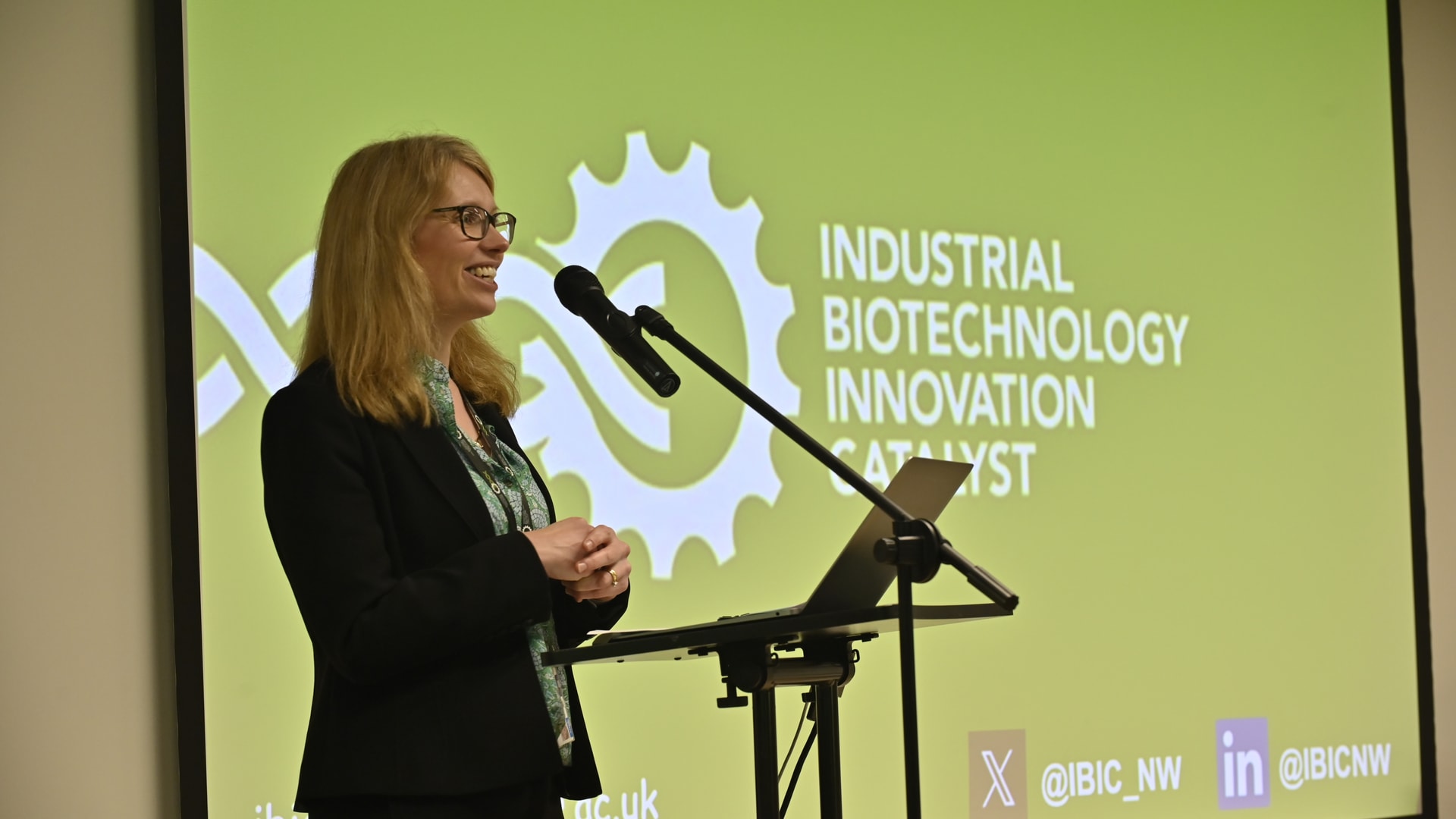
A person speaking at a lectern with a microphone, in front of a green screen displaying the Industrial Biotechnology Innovation Catalyst logo.
Professor Aline Miller speaking at the launch of the Industrial Biotechnology Innovation Catalyst (IBIC).
MIB is also helping to strengthen the North West's biotechnology economy. The £5.2 million Industrial Biotechnology Innovation Catalyst (IBIC), led by The University of Manchester, connects five North West universities with businesses, investors and civic partners to help turn research into commercial opportunities. Its network has grown to more than 2,800 members and has funded 75 projects.
By 2029, IBIC aims to support 25 early-stage companies, deliver 80 industry proof-of-concept studies and help enable ten new spin-outs or start-ups.
The next 20 years
Looking to the next 20 years, Professor Green believes one of the biggest changes will be a greater ability to predict and design new biological systems with increasingly sophisticated properties.
“I think the field is approaching an era where we will gain far greater predictive control over biological components and systems. This will allow us to work at unprecedented speed and begin to address increasingly complex challenges to help meet societal needs.”