



24
November
2026
|
16:00
Europe/London
Ten years of partnership driving breakthroughs in rare blood cancer research
A deeply personal commitment and a decade of support from The Oglesby Charitable Trust are helping Manchester researchers advance understanding and treatment of chronic myelomonocytic leukaemia (CMML), a rare and aggressive blood cancer.
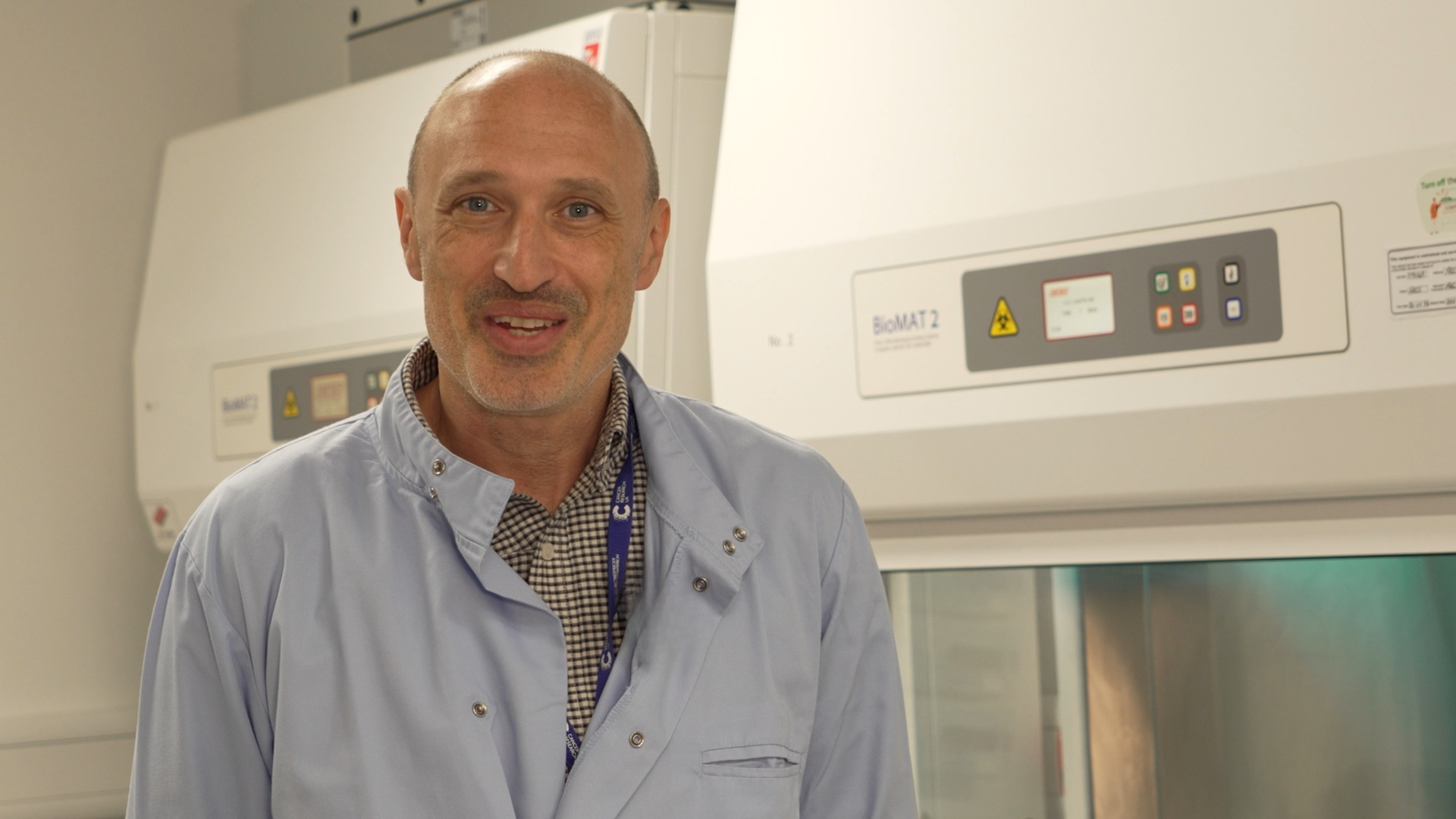
Dan - no mic (1)
The partnership has enabled researchers and clinicians at The University of Manchester to build a specialist programme that connects laboratory discovery with patient care. It also reflects the ambition of Challenge Accepted, the University’s campaign to accelerate progress on the major challenges facing our world through philanthropy.
The programme began after Manchester businessman Michael Oglesby CBE, who received an honorary doctorate from The University of Manchester, was diagnosed with CMML. His determination to improve prospects for others did more than fund a research project: it set in motion a decade-long partnership that The Oglesby Charitable Trust has championed, combining a deeply personal purpose with the University’s ability to build the specialist people, infrastructure and clinical links needed to change the outlook for patients.
The partnership has supported a range of basic, translational and preclinical work resulting in numerous publications and international presentations, advancing knowledge about the biology of this disease.
Research driving change to patient care
One example is the Manchester-led AMMO clinical trial, which found that the oral drug ASTX727 improved responses and significantly prolonged survival in people with chronic myelomonocytic leukaemia, compared with standard treatment. It is the first randomised trial in around 30 years to show a survival benefit from drug treatment in CMML and is already influencing international clinical practice.
Results presented at an American Society of Haematology meeting showed that patients receiving ASTX727 had better responses to treatment and lived longer than those receiving standard treatment.
By bringing together specialist clinical expertise, a nationally important collection of samples and advanced laboratory research, the programme has helped accelerate progress that could influence future patient care.
Dr Wiseman said: “The Oglesby Charitable Trust’s long-term commitment has given us the stability and ambition to build a genuinely integrated CMML research programme. It has enabled us to develop the UK’s largest CMML biobank, ask fundamental questions about how this rare cancer develops and translate those discoveries towards more personalised treatment approaches.
“For patients, the significance is clear: better biological understanding gives us a stronger basis for improving diagnosis, identifying who may benefit from particular treatments and designing the next generation of clinical studies. None of this would have been possible without the Trust’s belief in the value of sustained research into a rare and under-served cancer.”
Building a world-leading CMML research programme
The Trust’s sustained support has helped Manchester recruit specialist talent, create the UK’s largest CMML biobank, connect research with patient care and attract further investment to an under-served field.
“
Our family saw the impact CMML has on patients firsthand when my dad, Michael, was diagnosed. Although he knew new treatments wouldn’t be developed in time for him, he was determined to do what he could to help others facing the same situation in future. The research at Manchester is an important part of his legacy – there’s been real progress, and we have hope that one day, the future will look very different for families facing CMML
Chris Oglesby, Chief Executive of Bruntwood,
„

CMML is a rare blood cancer with few effective treatments and limited access to clinical trials. In 2016, it had the worst prognosis of any blood cancer, with only three FDA-approved drugs and five-year survival below 20%.
Michael Oglesby asked the questions that would shape the programme’s purpose: why were there so few treatment options for people with CMML, why were so few research groups focused on the disease, and what could Manchester deliver for patients if The Oglesby Charitable Trust invested with ambition and sustained commitment?
Those questions led to an initial £1.1m gift and sustained support totalling £2.4m to date. This philanthropic leadership has had a powerful leverage effect, helping to attract more than £8m in additional research income from research councils, charitable bodies and other private philanthropists.
Together, this investment has enabled Manchester to recruit specialist talent, build research capacity and accelerate progress for patients. Two Fellowships supported clinician scientist Dr Daniel Wiseman and scientist Dr Kiran Batta to establish a CMML research group spanning disease biology and the development of new therapies.
A sustained partnership for patients
Chris Oglesby, Chief Executive of Bruntwood, said: “Our family saw the impact CMML has on patients firsthand when my dad, Michael, was diagnosed. Although he knew new treatments wouldn’t be developed in time for him, he was determined to do what he could to help others in the future and started funding the research three years before he died. In the 10 years that our Trust has supported the research, Dan and the team at Manchester have made real progress, and we have hope that one day, the future will look very different for families facing CMML.”
The collaboration forms part of The Oglesby Charitable Trust’s wider commitment to cancer research in Manchester, which has also included support for the Oglesby Cancer Research Building, a major hub bringing researchers and clinicians together to accelerate progress against cancer. Michael also played a leading role in the fundraising campaign for the rebuilding of the Paterson Building, helping to secure £10m towards the new facility where the CMML research team is now based.
As the CMML programme enters its next phase, the team will continue to investigate the biology that drives different forms of the disease, refine ways to match patients to the most promising treatment approaches, and develop collaborations that can take discoveries into future clinical studies. Through Challenge Accepted, the University is working with philanthropic partners such as The Oglesby Charitable Trust to show how sustained giving can turn world-leading research into meaningful change for patients and communities.
Find out more about the CMML research collaboration.
Image: Dr Dan Wiseman