Skip to navigation | Skip to main content | Skip to footer
The University of Manchester home
  • Home
  • Study

    Undergraduate

    • Undergraduate Courses
    • Prospectus (undergraduate)
    • Applying (undergraduate)
    • Offer-holders
    • Fees and funding (undergraduate)
    • Widening participation programmes
    • Study experience (undergraduate)
    • Student support (undergraduate)
    • Contact us (undergraduate)

    Taught master's

    • Taught master's Courses
    • Admissions (taught master's)
    • Fees and funding for taught master's study
    • Why should I study a master’s?
    • Teaching and learning (taught master's)
    • Meet us (taught master's)
    • Student support (taught master's)
    • Why Manchester? (taught master's)
    • Contact us (taught master's)

    Postgraduate research

    • Why Manchester? (postgraduate research)
    • Research areas
    • Postgraduate research Programmes
    • People (postgraduate research)
    • Admissions (postgraduate research)
    • Fees for postgraduate research
    • Funding for postgraduate research
    • Contact us (postgraduate research)

    Postgraduate certificates and diplomas

    Online and blended learning

    Continuing professional development courses

    Student terms and conditions, policies and procedures

    Student life

    • Campus spaces
    • Student experience
    • City guide

    Open days

    Campus tours

    Accommodation

    Get ready for Manchester

    Virtual Manchester

    Making a payment

    International

    • Why study at Manchester? (for international students)
    • Accommodation for international students
    • English education system
    • International admissions
    • Finance and scholarships for international students
    • Study abroad and exchange
    • Country-specific information
    • Exhibitions and visits in your country
    • Contact the international team
  • Research

    Research highlights

    • Advanced materials – research highlights
    • Biotechnology – research highlights
    • Cancer – research highlights
    • Energy – research highlights
    • Global inequalities – research highlights

    Research structure

    • Research institutes
    • Research platforms
    • Research facilities
    • Our Faculties

    Research strategy and achievements

    Research Explorer

    • Researchers
    • Publications
    • Projects

    Research impact and innovation

    • REF 2021 (research)
    • Research impact showcase (research)
    • SDG campaign (research)

    Research partnerships

    Postgraduate research

    Bicentenary PhD Studentships and Fellowships

    Researcher development

    Research environment

    Research vacancies

  • Collaborate

    Business engagement and knowledge exchange

    Innovation

    Policy

    Make a donation

    Inspiring local communities

    Global influence

  • About

    Our story

    Strategy to 2035

    University structure

    People

    Key dates

    Rankings

    Our campus

    Maps and travel

    Open to the public (visitor attractions)

    Facilities

    Conference venues

    Our bicentenary year

    History and heritage

    Social responsibility

    Teaching and learning excellence

    Environmental sustainability

    News

    Events

    The University Magazine

    Governance

    Privacy information

  • Connect

    Jobs

    Alumni

    Teachers and careers advisers

    Social media

    Contact us

  • Give
  • Share via
    • Share by Email
    • Share via Facebook
    • Share via Facebook Messenger
    • Share via Twitter
    • Share via LinkedIn
    • Share via Pinterest
    • Share via Reddit

Alternatively, use our A–Z index

  • Home
  • Research
    • Research highlights
    • Research structure
    • Research institutes
    • Research platforms
    • Research facilities
    • Our faculties
    • Research strategy and achievements
    • Research Explorer
    • Research impact
    • Research partnerships
    • Postgraduate research
    • Researcher development
    • Research environment and culture
    • Fellowships

AI at Manchester - a Digital Futures initiative

It began here – with Turing’s seminal paper on AI. Now, we're shaping the future.

  • Home
  • Research
  • AI
  • ResearchOur AI research spans fundamental discovery to real-world impact.
  • CollaborateStart a conversation that shapes tomorrow.
  • AboutA university with impact at its heart.

The machine that dawned the digital age

75 years ago, a machine built here, at The University of Manchester, helped change the course of history. 

The Ferranti Mark I, widely recognised as the world’s first commercially available general-purpose computer, transformed computing from an experimental idea into a technology that could be used beyond the laboratory. Today, as artificial intelligence opens a new chapter in the story of computing, that moment feels more relevant than ever.

In this digital mini zine we celebrate the remarkable work carried out by University researchers and the people of Ferranti Ltd who brought this machine to life. Through a series of magazine-style features, we not only celebrate the achievements of the past, but also explore some of the biggest questions facing computing today: trust, collaboration, quantum technologies, brain-inspired systems and what comes next as intelligent machines become part of everyday life.

Grounded in Manchester's pioneering computing heritage but focused firmly on the future, the mini zine reveals how Manchester became the birthplace of modern computing.

Explore the Ferranti Mk I story

Three men work at the console of the Ferranti Mk I

Advancing AI research and innovation

At The University of Manchester, we believe in hybrid intelligence: AI that enhances human intelligence, rather than replaces it.

That’s why we partner closely with you to understand your key challenges and design AI solutions that directly address them, always applied responsibly and ethically.

When you collaborate with us, you gain access to:

  • More than 1,600 expert researchers who can accelerate your AI project.
  • A rich research ecosystem of world-leading Institutes, Centres, equipment and facilities, all supported by our interdisciplinary research Platforms.

Our scale fuels bold solutions: whatever the challenge, we are here to help you turn your ideas into action.

Collaborate with us

Audience in a modern lecture hall watching a presentation on the Digital Futures Platform.

Connect with our experts

Exploring a research partnership, seeking R&D support, or keen to shape the future of AI? We’ll connect you with the right people.

Start the conversation

Person viewing projected computer code with blurred lights, symbolising tech and innovation.

Explore our latest AI papers

Explore the full breadth of our research, from foundational science to impactful application via our research explorer portal.

Read our papers

Digital image of an open book with glowing green circuits forming 'AI'.

Join our mailing list

Keep up to date with the latest AI research and community news from Digital Futures.

Sign up

Hand reaching towards a digital stream of binary code, symbolising data, AI, and advanced technology
Futuristic wireframe hands surrounding a glowing AI microchip with circuit lines on a dark blue background.

Our research ecosystem

Our research ecosystem supports our community to drive ideas that change the world.

Through a global network of researchers and innovators, our interdisciplinary ecosystem brings together expertise from across fields to accelerate discovery and deliver real‑world impact. From transforming healthcare and strengthening communities to advancing environmental sustainability, our Institutes and Centres create the conditions where ideas flourish, solutions scale and research improves lives locally and globally.

Discover our research

Students collaborating on a humanoid robot project, symbolising AI research, tech, and innovation.
Glowing blue and pink light trails intertwining on a dark gradient background in a digital abstract design.

News

Show previous news story Show next news story

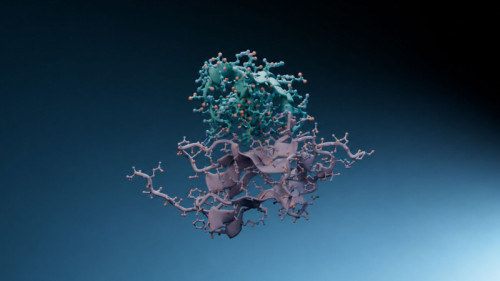
Manchester scientists demonstrate AI-designed enzyme for drug synthesis

The new RFD4-Proteina unified generative model for protein design – created by the Institute for Protein Design (IPD) in collaboration with NVIDIA – uses advanced AI to generate entirely new protein sequences and structures, achieving computational design success rates five to ten times higher than previous models and generating candidates five to ten times faster.

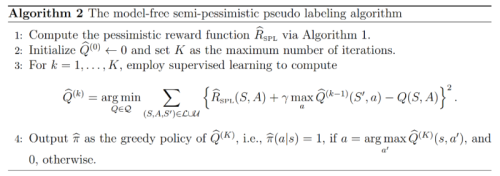
Semi-pessimistic Reinforcement Learning paper accepted in JASA.

Omar Rivasplata's key paper on Reinforcement Learning via semi-pessimistic pseudo labelling has been accepted in JASA, the Journal of the American Statistical Association.

When AI breaks your heart

Dr Jennifer Cearns is a digital anthropologist, specialising in AI and algorithms in social life. Her research focuses on how people relate to one another through emerging intelligent technologies and she is currently conducting researching into Human-AI relations, looking at intimacy and how trust and empathy forms between humans and AIs.As people increasingly search for connection in an often-isolated modern world, the line between technology and companionship is blurring. By examining what happens when those bonds with AI falter, Dr Cearns’ work sheds light not only on the ethics of human-machine intimacy, but also on the wider human search for belonging.In her most recent project, she has used digital ethnography and interviews to examine how users emotionally invest in AI ‘soulmates’ – AI chatbots that become romantic partners to humans – and the grief that follows their malfunction or shutdown. This research is critical for highlighting new forms of kinship and ethical care in human-machine relationships.Meet the researcherJennifer Cearns is Lecturer in AI Trust and Security, in the Department of Social Anthropology. Her research explores how people form emotional, romantic, and therapeutic relationships with AI, focusing on kinship, ethics, and cultural understandings of personhood.Email Dr Cearns >>Email the Business Engagement Team >>View academic profile >>Read her papersKinship through code, personhood as node: AI afterlives and new technologies of the selfDivining Truth: Towards an Epistemology of AI

AI engineers know the ethical risks presented by AI, but workplace culture prevents action

AI engineers often recognise ethical risks associated with the systems they build, but many lack the authority, incentives and organisational support needed to act on them, according to new research from The University of Manchester. 

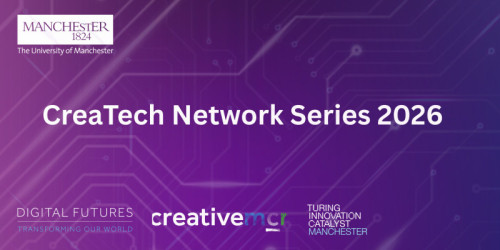
Creativity, AI and Collaboration: Looking Back on CreaTech 2026

Between February and June 2026, the CreaTech Network Series brought together researchers, creatives, cultural organisations and industry partners from across Greater Manchester and the North West to explore the opportunities and challenges presented by emerging digital technologies. Delivered by Digital Futures, Creative Manchester and Turing Innovation Catalyst Manchester, the series explored creativity and AI through three events focused on entertainment, cultural heritage, and free and open-source technologies. Each event combined short talks with panel discussions and audience questions, creating space for people from different sectors to share perspectives and experiences. Creativity and AI: EntertainmentThe series opened at Contact Theatre with a discussion on the growing role of AI across film, television and games. Hame Sehmi, Lead Research Engineer at Epic Games, shared examples of how AI tools are being used in areas such as facial animation and digital production workflows. Tillie Quattrone from The University of Manchester explored the use of AI in digital de-ageing for film and some of the questions these technologies raise around creative work and production. The talks were followed by a panel discussion and audience Q&A, which sparked conversation about how AI is changing the entertainment industry.   Creativity and AI: Cultural HeritageThe second event took place at Manchester Art Gallery and focused on the use of AI within libraries, archives and museums. Jennie Fletcher and Lesley Gray from the University of Cambridge introduced the AI for Cultural Heritage Hub (ArCH), which is supporting organisations to explore new ways of making collections more accessible. Jason Evans, Open Data Manager and AI Lead at the National Library of Wales, shared examples of how AI is being used to improve access to cultural collections and support new forms of public engagement. Dr Benjamin Wiggins from The University of Manchester also reflected on how AI can work alongside approaches such as crowdsourcing and public participation. Audience questions continued the discussion, with conversations ranging from practical applications of AI through to the challenges and responsibilities that come with its use.  Creativity and AI: Free and Open-Source TechnologiesThe final event in the series was held at SISTER and explored the role of free and open-source technologies in creative and cultural practice. Jan Macháček, Principal Engineer and Visiting Professor at The University of Manchester, spoke about the opportunities that open technologies create for learning, experimentation and collaboration. Eriol Fox brought a design perspective to the conversation, discussing accessibility and inclusion in the development of digital tools. The wider panel, which included Mengzhi He and Julian Tait, CEO of Open Data Manchester, explored the importance of community, skills and knowledge sharing across the sector. The event concluded with a panel discussion and audience Q&A, giving attendees the opportunity to reflect on the future role of open technologies in creative practice. Across all three events, participants explored how emerging technologies are influencing creative work in different ways, from film production and storytelling to cultural collections and open-source communities. The series created opportunities for knowledge exchange, new partnerships and cross-sector collaboration, helping to strengthen connections across the region's CreaTech ecosystem. We'd like to thank all the speakers, attendees and partners who contributed to the programme, and we look forward to continuing these conversations through future CreaTech Network activities. 

Contact us

  • +44 (0) 161 306 6000
  • Contact details

Find us

The University of Manchester
Oxford Road
Manchester
M13 9PL
UK

Connect with us

  • LinkedIn page for The University of Manchester
  • Instagram page for The University of Manchester
  • YouTube page for The University of Manchester
  • TikTok page for The University of Manchester
  • Facebook page for The University of Manchester
  • Bluesky page for The University of Manchester

Social media directory


  • Disclaimer
  • Data Protection
  • Copyright notice
  • Web accessibility
  • Freedom of information
  • Charitable status
  • Royal Charter Number: RC000797