

Skip to navigation | Skip to main content | Skip to footer
The University of Manchester home
  • Home
  • Study

    Undergraduate

    • Undergraduate Courses
    • Prospectus (undergraduate)
    • Applying (undergraduate)
    • Offer-holders
    • Fees and funding (undergraduate)
    • Widening participation programmes
    • Study experience (undergraduate)
    • Student support (undergraduate)
    • Contact us (undergraduate)

    Taught master's

    • Taught master's Courses
    • Admissions (taught master's)
    • Fees and funding for taught master's study
    • Why should I study a master’s?
    • Teaching and learning (taught master's)
    • Meet us (taught master's)
    • Student support (taught master's)
    • Why Manchester? (taught master's)
    • Contact us (taught master's)

    Postgraduate research

    • Why Manchester? (postgraduate research)
    • Research areas
    • Postgraduate research Programmes
    • People (postgraduate research)
    • Admissions (postgraduate research)
    • Fees for postgraduate research
    • Funding for postgraduate research
    • Contact us (postgraduate research)

    Postgraduate certificates and diplomas

    Online and blended learning

    Continuing professional development courses

    Student terms and conditions, policies and procedures

    Student life

    • Campus spaces
    • Student experience
    • City guide

    Open days

    Campus tours

    Accommodation

    Get ready for Manchester

    Virtual Manchester

    Making a payment

    International

    • Why study at Manchester? (for international students)
    • Accommodation for international students
    • English education system
    • International admissions
    • Finance and scholarships for international students
    • Study abroad and exchange
    • Country-specific information
    • Exhibitions and visits in your country
    • Contact the international team
  • Research

    Research beacons

    • Advanced materials – research beacon
    • Biotechnology – research beacon
    • Cancer – research beacon
    • Energy – research beacon
    • Global inequalities – research beacon

    Research structure

    • Research institutes
    • Research platforms
    • Research facilities
    • Our Faculties

    Research strategy and achievements

    Research Explorer

    • Researchers
    • Publications
    • Projects

    Research impact and innovation

    • REF 2021 (research)
    • Research impact showcase (research)
    • SDG campaign (research)

    Research partnerships

    Postgraduate research

    Bicentenary PhD Studentships and Fellowships

    Researcher development

    Research environment

    Research vacancies

  • Collaborate

    Business engagement and knowledge exchange

    Innovation Factory

    Policy

    Make a donation

    Inspiring local communities

    Global influence

  • About

    Our story

    Strategy to 2035

    University structure

    People

    Key dates

    Rankings

    Our campus

    Maps and travel

    Open to the public (visitor attractions)

    Facilities

    Conference venues

    Our bicentenary year

    History and heritage

    Social responsibility

    Teaching and learning excellence

    Environmental sustainability

    News

    Events

    The University Magazine

    Governance

    Privacy information

  • Connect

    Jobs

    Alumni

    Teachers and careers advisers

    Social media

    Contact us

  • Share via
    • Share by Email
    • Share via Facebook
    • Share via Facebook Messenger
    • Share via Twitter
    • Share via LinkedIn
    • Share via Pinterest
    • Share via Reddit

Alternatively, use our A–Z index

  • Home
  • Research
  • AI

Research that changes lives

Our AI research is driven by 1,600 interdisciplinary researchers and spans fundamental discovery to real-world impact.

research
  • Home
  • Research
  • AI
  • Home
  • Research
  • AI
  • Research
  • ResearchOur AI research spans fundamental discovery to real-world impact.
  • CollaborateStart a conversation that shapes tomorrow.
  • AboutWe are shaping the future of AI - for Manchester, the UK and the world.

Ideas that change the world

Through our global network of researchers and innovators, our AI research is creating real-world impact for people, communities and the planet.

From advancing breast cancer treatment and improving menopause care in Greater Manchester to transforming crop productivity in Ghana and tackling online misogyny, we're using AI to deliver positive change for society and the environment.

Explore our case studies

Healthcare worker assisting a patient with medical imaging, symbolising research and innovation.

Interdisciplinary by design

Research thrives within a dynamic, interconnected and cross-disciplinary ecosystem and our scale is our strength. Digital Futures – one of the University’s five research Platforms – brings together researchers from across the institution and empowers them to accelerate discovery and deliver impact. Organised into interdisciplinary research Institutes and Centres that are supported by cutting-edge facilities we allow ideas flourish and solutions to scale.

Our strengths include:

Researcher working at multiple screens with code and data, symbolising computing and innovation.

Advanced Computing Infrastructure

Including state-of-the art Graphic Processing Unit, ensuring we offer one of the most supportive research environments for AI.
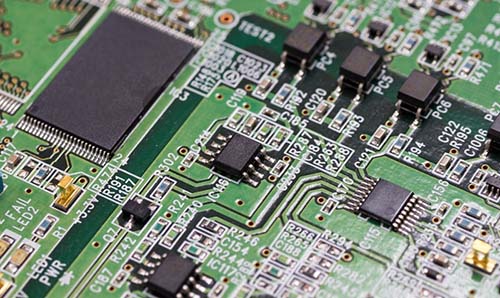
View of Earth from space with glowing points connected by white network lines, symbolising global connectivity.

ARM Centre of Excellence

A Centre focussing on the full spectrum of modern processor technologies.

A hand at a control panel with red buttons.

Centre for AI and Decision Science

Bringing together interdisciplinary expertise to shape the future of data-driven and responsible decision-making.

Abstract blue and orange waves forming curved circuitry, suggesting data flow and AI networks.

Centre for AI Fundamentals

Uniting research talent to develop pioneering AI solutions that drive competitive advantage.

Mary Newland lab

Centre for Doctoral Training

Building the skills and talent needed to drive the AI revolution.

Abstract blue and pink circuitry, suggesting data flow and AI networks.

Centre for Digital Trust and Society

A focal point for research that explores aspects of trust and security in our digital world.
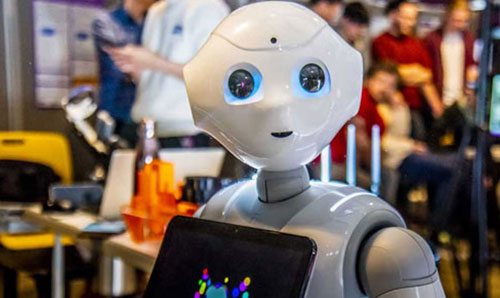
Humanoid robot with expressive eyes and tablet screen on chest, showcased at a technology event with people.

Centre for Robotics and AI

Developing and applying novel AI approaches in the design of robots and autonomous systems for real world applications.

Scientists working in a modern laboratory with microscopes, symbolising research and innovation.

Christabel Pankhurst Institute for Health Technology Research and Innovation

Driving needs-led health technology research and innovation and providing end-to-end support for translation into practice.

View of Earth from space with glowing points connected by white network lines, symbolising global connectivity.

Digital Futures Platform

A pan-University network of 2,000+ researchers across 30 disciplines, fostering collaboration and sparking cross-pollination of ideas.

White line-art map of Europe created from horizontal bars on a dark background, symbolising connection.

ELLIS Unit Manchester

One of only four UK units, strengthening Europe’s leadership and sovereignty in AI research.

Tablet displaying heart health data alongside stethoscope, blood pressure monitor, pen, and medical charts.

Manchester-Melbourne-Toronto International Centre for Translational Digital Health

Advancing digital health in Canada, the UK and Australia through new technologies, policies and service models.

Scientists working in a modern laboratory with microscopes, symbolising research and innovation.

National Centre for Text Mining

NaCTeM provides text mining services to support academic research.

Woman leading a business meeting, speaking to colleagues around a conference table in a modern office.

Turing Innovation Catalyst

Driving Greater Manchester’s AI ecosystem by supporting existing start-ups, creating new ventures, and developing skills across the region.

Meet some of our early career academics shaping the future of AI
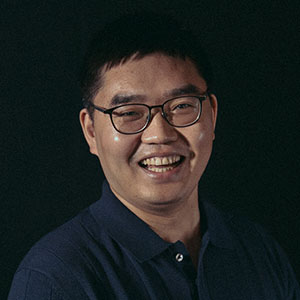
Dr Hongpeng Zhou

Dr Hongpeng Zhou

How can we trust AI to help treat cancer if doctors don’t understand how it works?’ I develop transparent algorithms that explain how AI makes its predictions – giving clinicians the clarity to design treatment with confidence.
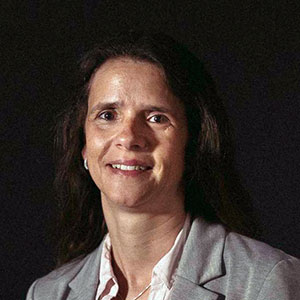
Discover more of my work >>

Dr Claudia Lindner

Dr Claudia Lindner

My research group develops AI-driven software tools that support clinicians in making more accurate and timely decisions from medical images, such as X-rays. Our work aims to improve patient care for people with bone and joint conditions by enabling earlier diagnosis, more informed treatment planning and monitoring, and advancing research into musculoskeletal health.
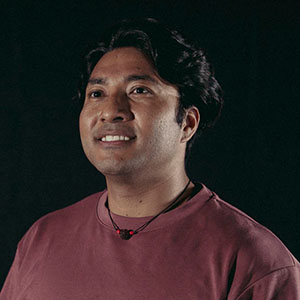
Discover more of my work >>

Dr Rahul Singh Maharajan

Dr Rahul Singh Maharajan

We don’t want cold, emotionless robots like in Terminator, do we? My work helps create social robots that understand and learn from human emotions – so they can interact naturally and offer real support in sensitive settings like elderly care, where empathy truly matters.
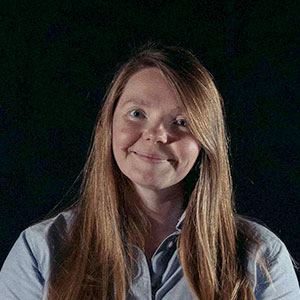
Discover more of my work >>

Dr Elizabeth Lewis

Dr Elizabeth Lewis

I use integrated water modelling, including a combination of AI and digital technology innovation, to tackle urgent water challenges like floods, droughts, and climate change.
Integrated water modelling sits at the cutting edge of climate resilience and enables us to tackle urgent, interconnected water challenges – driving smarter, system-wide environmental and infrastructure decisions.
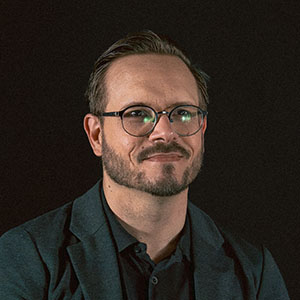
Discover more of my work >>

Dr João C. Magalhães

Dr João C. Magalhães

What if AI doesn’t fix inequality but makes it worse? To ensure AI helps rather than harms society, my research asks, who really benefits from AI? By understanding the political forces shaping its design and use, I work to ensure these technologies serve society fairly, not just the powerful few.

My research explores the many ways AI and politics are connected, with a focus on questioning who benefits from these technologies. I take a critical approach, asking whose interests shape how AI systems are designed and used.

Discover more of my work >>

Manchester AI experts

To discover more of our experts visit our Research Explorer page
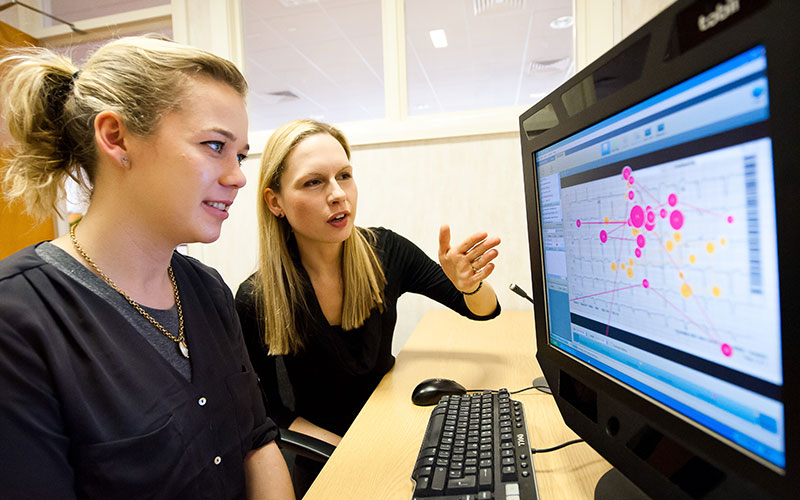
Visit Research Explorer

Two researchers discussing data visualisation on a computer screen, symbolising AI and innovation.

Collaborate with us

Interested in a research partnership? Want to chat to one of our experts? Not sure how the start the conversation?

Talk to us

Person typing on a laptop at a desk

Join our mailing list

Keep up to date with the lates AI research and community news via our newsletter.

Sign up

Open book with glowing green circuits forming 'AI', symbolising knowledge, learning, and technology.

Contact us

  • +44 (0) 161 306 6000
  • Contact details

Find us

The University of Manchester
Oxford Road
Manchester
M13 9PL
UK

Connect with us

  • LinkedIn page for The University of Manchester
  • Instagram page for The University of Manchester
  • YouTube page for The University of Manchester
  • TikTok page for The University of Manchester
  • Facebook page for The University of Manchester
  • Bluesky page for The University of Manchester

Social media directory


  • Disclaimer
  • Data Protection
  • Copyright notice
  • Web accessibility
  • Freedom of information
  • Charitable status
  • Royal Charter Number: RC000797