Major international exhibition Entangled and Woven unites contemporary Indian and Korean artists with the Whitworth’s historic textile collection.
What connects time-honoured craft traditions from India and Korea with Manchester’s own industrial past? And why are historic textiles still relevant today?
These questions are explored through a major new exhibition that opened in July 2026 at the Whitworth. Entangled and Woven, under the artistic direction of Director Sook-Kyung Lee, continues the gallery’s work to bring global art to the wider public, opening a dialogue between cultures and histories through weaving, dyeing and embroidery, and revealing how ideas are shared across communities and place over time.
The exhibition, previously shown in Korea and India, forms part of the Hyundai Translocal Series – a significant initiative enabling international artistic exchange between Korean art institutions and global artists and organisations, with Manchester a key partner of choice.
Eight artists – four from India and four from Korea, inspired by reciprocal visits to each country – have produced new works drawing on more than 400 years of textile making traditions.
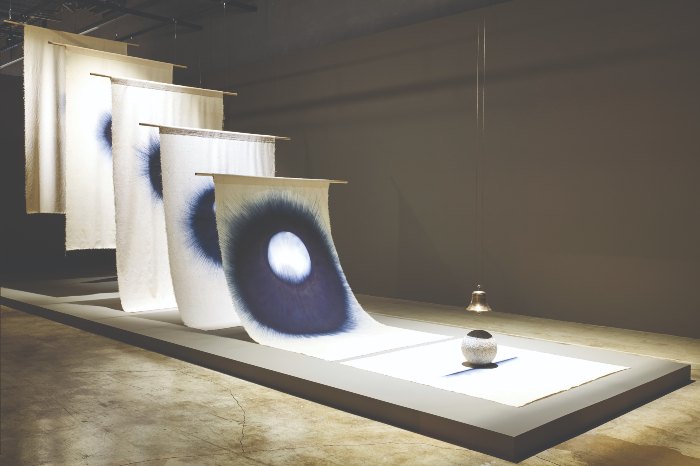
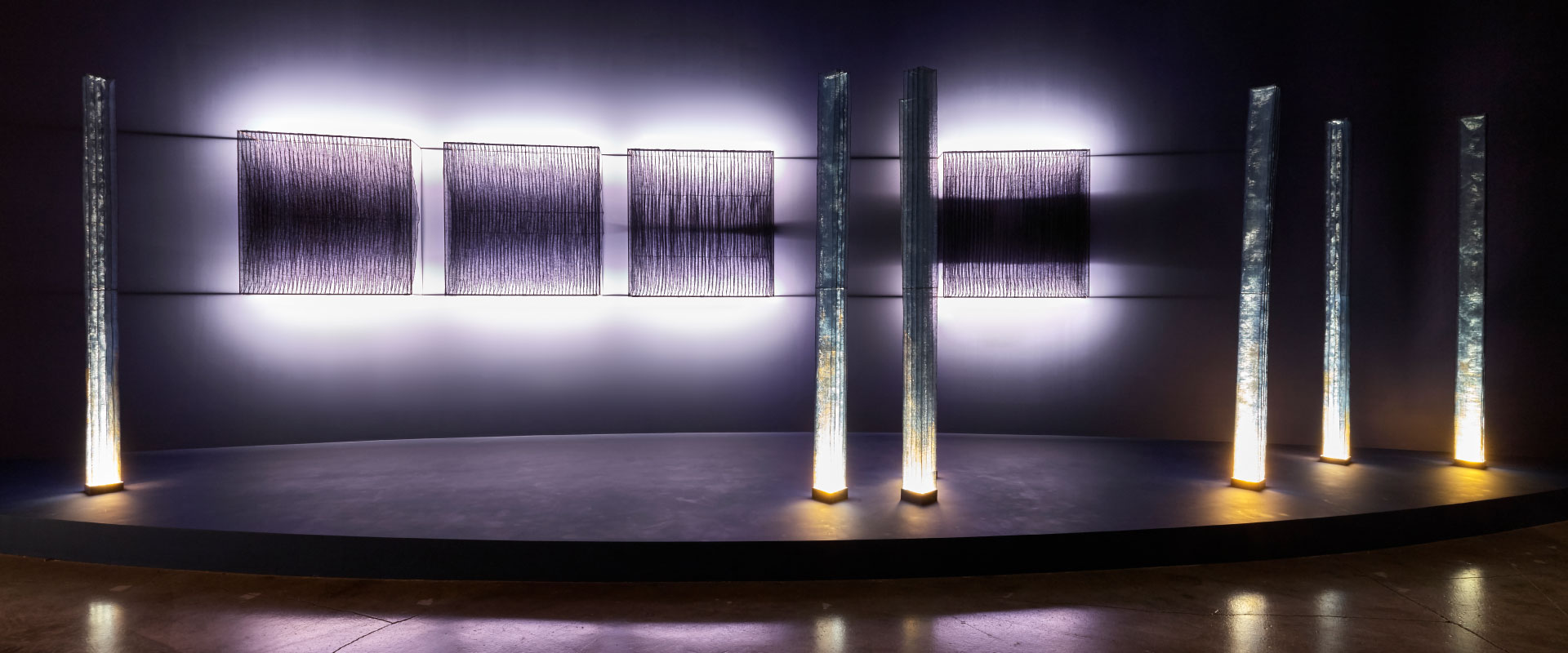
Kaimurai creates textile-based installations using naturally dyed indigo cloth
The Manchester connection
Pieces selected from the Whitworth’s vast textiles collection accompany the works.
“Our collection is the foundation that built this city and this museum, but we want to understand those collections within today’s context,” explains Amy George, Senior Curator for Collections, Textiles and Wallpaper at the Whitworth.
“Bringing historic collections together with artists and forming different connections with people helps us to unpick and deepen our understanding of the collections and their relevance today."
Importantly, the project also highlighted gaps within the Whitworth’s textiles collection. While there are many Indian items – due, in part, to Manchester’s historical trade links with the Gujarati city of Ahmedabad – there are comparatively few from Korea.
“This project has given us the opportunity to acquire more historic Korean textiles that allow us to tell that south-east Asian story,” Amy says. These include Korean embroidered panels once used for a royal court dress to signify the ranks of Korean dignitaries, and bojagi – traditional square cloths made from hemp and another plant fibre called ramie, or mosi, taken from a fine thread inside a nettle–used for wrapping gifts and other items.
“What I found particularly interesting with mosi is the extraordinary way that the fibre was created,” Amy says. “You would use your teeth to strip the nettle into tiny fibres and then twist it on a bare knee.”
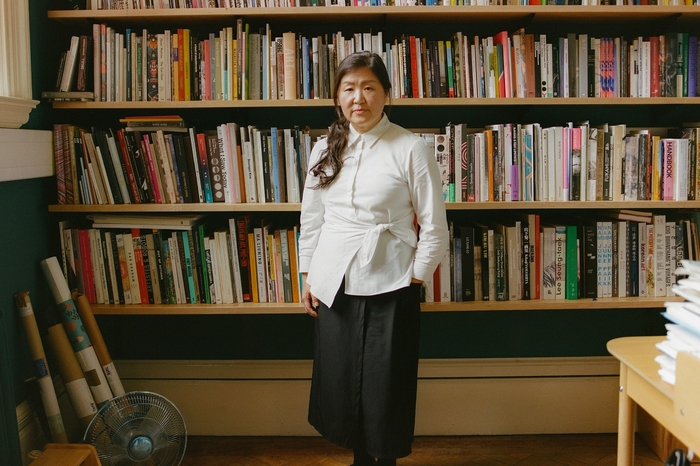
Sook-Kyung Lee, Director of the Whitworth
Drawing on Gujarati craft
In India, the Korean artists visited New Delhi and Gujarat, both renowned for their distinctive textile techniques. Korean artist Jounghye Yoo’s work, Gilded Veil: A Mysterious Curtain Lightly Draped in Gold, combines traditional Korean silk and embroidery with Ajrakh-printed cotton made in the Kutch region of Gujarat.
Youngin Hong worked with Kutch-based collective Kala Raksha on Sacred Empires, a series of printed flags recognising the innovative nature of handmade textiles, while Somi Ko’s work combines Korean and Indian textile histories to explore questions of independence and autonomy.
The works of Yeonsoon Chang and Indian artist Kaimurai both use indigo as a dye pigment, with Chang’s sculptural pieces woven from abaca, a banana plant fibre. “Chang creates pieces that have lots of air and space within them,” Amy explains. “She has a very loose weave, which she stiffens and layers up, creating 3D sculptural pieces using indigo dye.
“Both she and Kaimurai create works that represent what they see when they meditate. That became such an important part of their work and was a really nice link between the artists.”
The spaces between
Sumakshi Singh, who will represent India at the prestigious international art exhibition Venice Biennale this year, presents a striking piece inspired by a link near a Korean temple, its delicate design featuring a bridge of white thread with a repeating swastika – a symbol that travelled from India to Korea through Buddhism.
The approach involves a specific embroidery technique, with the cloth dissolved to leave strands of thread behind.
“These threads hang in the air and are like a tracing of space,” Amy says. Indian founded fashion label PÉRO uses a similar technique in Entangled Memories.
Art connects local experiences to global conversations. It’s one example of how we see the Whitworth as both rooted in Manchester and deeply connected to the wider world.
A global future
A wider series of exhibitions further connecting Manchester to global conversations through art, research and collaboration include The Manifold of Memory, a new installation by Kazakh artist Gulnur Mukazhanova, and work by Kenyan visual artist Wangechi Mutu.
“What connects us in these transnational projects isn’t necessarily a departure from understanding your heritage or locality,” Amy says. “Textile craft is a way of finding connection."
As Whitworth Director Sook-Kyung Lee explains, the gallery’s work is for everyone, wherever they’re from.
“Projects like this allow us to understand Manchester’s histories through a wider global lens. The city’s textile heritage has been shaped by international exchange and colonial contexts; through the movement of materials, people, skills and ideas across borders.
“By bringing contemporary artists from Korea and India into conversation with the Whitworth’s collection, the exhibition opens new ways of thinking about those histories, while showing how art connects local experiences to global conversations. It’s one example of how we see the Whitworth as both rooted in Manchester and deeply connected to the wider world.”
Discover how to support culture and community at Manchester.