



24
August
2026
|
10:25
Europe/London
Blog: Shaping the future of nuclear safety
In this blog, Liutauras Kiltinavicius reflects on attending the IAEA Conference on Topical Issues in Nuclear Installation Safety in Vienna, exploring how international collaboration, innovation, regulation and leadership are shaping the future of nuclear safety and supporting the transition to a secure, net-zero future.
Safety is a fundamental human right
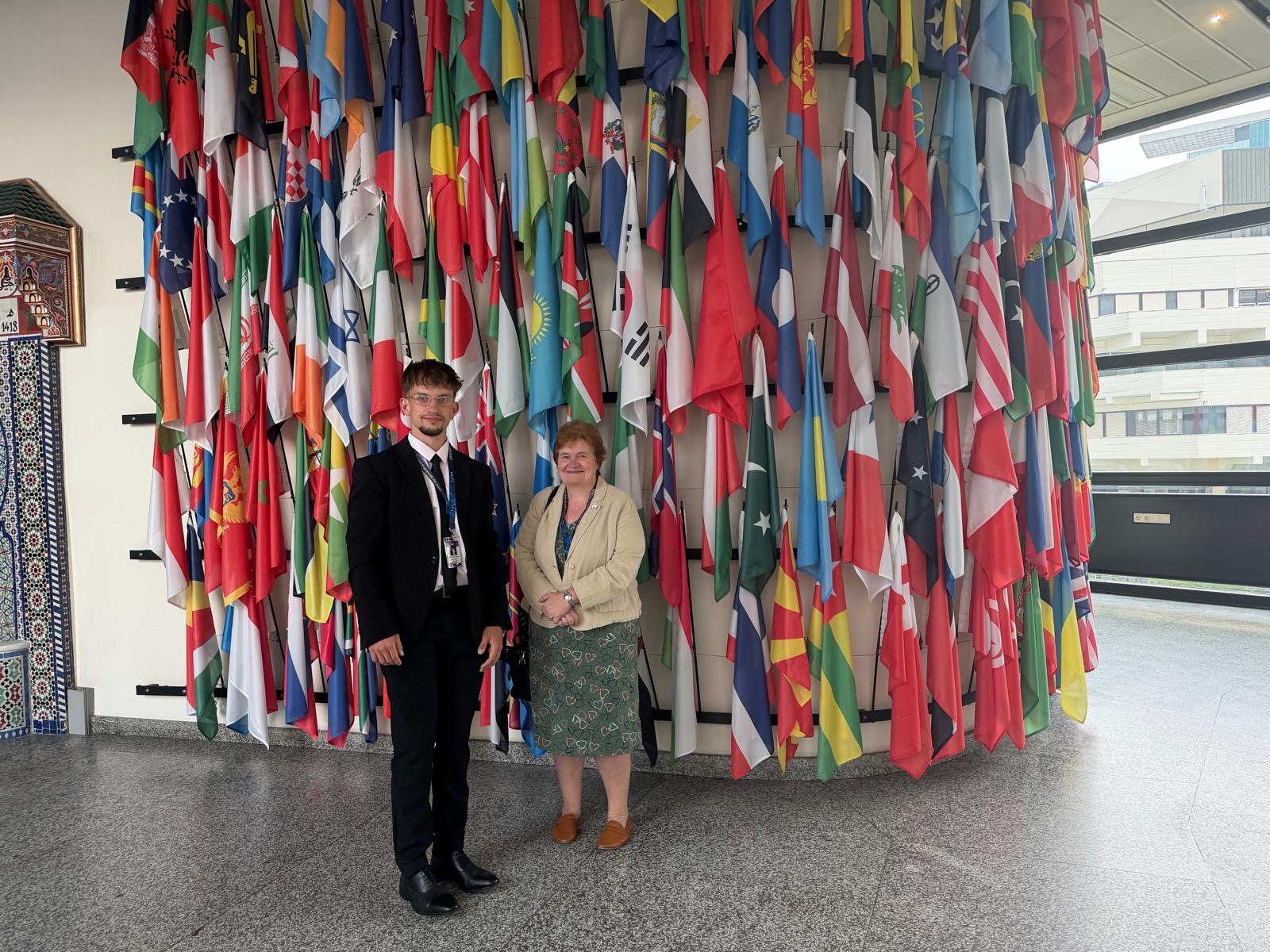
Guided by the IAEA’s motto, "Atoms for Peace and Development," effective regulation transforms this right into reality - managing invisible risks while keeping operators accountable. Every link in the safety chain, from bolt materials to human decision-making, protects the public trust required for a secure, net-zero future. Learning from the Past to Accelerate the Future was the theme of the IAEA conference on Topical Issues in Nuclear Installation Safety in Vienna, where I had the privilege of shadowing Professor Dame Fiona Rayment. Gwen Parry-Jones, the UK’s first woman nuclear plant station director, emphasised a respectful, constructive relationship between regulator and operator. Mark Basset spoke about the Fingleton Review: too much risk aversion, focus on process over outcome, and too little incentive to speak up. You could feel its ripples across the talks and conversations.
Innovation is forcing safety frameworks to adapt
From Russia’s floating reactors to China’s HPR1000 deployment, novel designs raise unprecedented regulatory questions. In operations, AI is accelerating efficiency, including a Swiss plant’s document retrieval model for over 2,500 files. EUROCONTROL tests deliberate AI errors to study cockpit safeguards, highlighting the need to manage human and AI interaction. Reprocessed fuel at misreported enrichment levels was delivered to Japan, known as the falsification incident, and Fiona outlined its role in why the UK committed to a GDF. For fusion, ITER’s 35-nation collaboration proves regulating emerging technology requires phased operations and space for uncertainty, reinforcing that safety is a marathon, not a sprint. Meeting the IAEA’s head of atomic data, Kalle Heinola, I discussed tritium storage in a uranium matrix for fusion applications, and an international database with contributors spanning atomic data to macro-level information. International harmonisation drives innovation.
International duplication is common
Thirteen countries in the European Utility Requirements help streamline up to 90% of generic design assessments, leaving 10% for site-specific and local jurisdiction challenges. Belgium is looking at similar processes for Gen IV, and South Korea is trying to remove unnecessary “fluff” from safety assessments. Like the EUR model, a broader international framework beyond current IAEA standards could streamline pre-licensing while respecting local laws. International harmonisation was a major topic in my discussions with Fiona. Sizewell C engineers outline the need for a “no change” committee when a micro change impacts the macro portfolio and is not as low as reasonably practicable. Learning from past experience is key to streamlining safety cases.
Ultimately, safety relies on leadership
Fiona’s talk emphasised creating space for diversity of thought to minimise groupthink, opening doors and expanding networks. She lives that fully: mentoring over 12 people, bringing me to Vienna, and giving her time to anyone who asked. Across the conference and my discussions, I saw the IAEA’s role as more than setting standards: it drives collaboration, manages communication and guides countries to safe outcomes. I left the IAEA with a bigger network, a better understanding of safety innovation, and what defines a leader. Thank you to Fiona and the Dalton Nuclear Institute for the unbelievable experience.