



28
September
2026
|
09:27
Europe/London
Blog: Stepping into the world of fusion
Over the summer, four interns joined The University of Manchester to explore fusion energy and the research and engineering challenges involved in making it a reality. Coming from backgrounds in physics, mechanical engineering, chemical engineering and materials science, the interns brought different perspectives to a shared research project.
For some, fusion was a completely new area. For others, the internship provided an opportunity to build on existing interests in materials, engineering and energy.
As an aspiring physicist, Zayna Quereshi welcomed the opportunity to step into the world of engineering and discover the breadth of disciplines involved in fusion research. Working alongside students from different engineering backgrounds showed her the value of bringing together different areas of knowledge to tackle complex challenges.
Mechanical Engineering student Marilou Gallo Slama also began the internship with little previous knowledge of fusion. She said that: “This internship has been an amazing opportunity to dive into a subject I had never had the chance to learn about in depth before: fusion energy.”
The group’s project focused on corrugated waveguides, which transfer microwaves from gyrotrons to a tokamak for plasma heating. Over the course of the internship, they researched how the technology works before using tomography data and specialist software to investigate the geometry and electromagnetic behaviour of the waveguides.
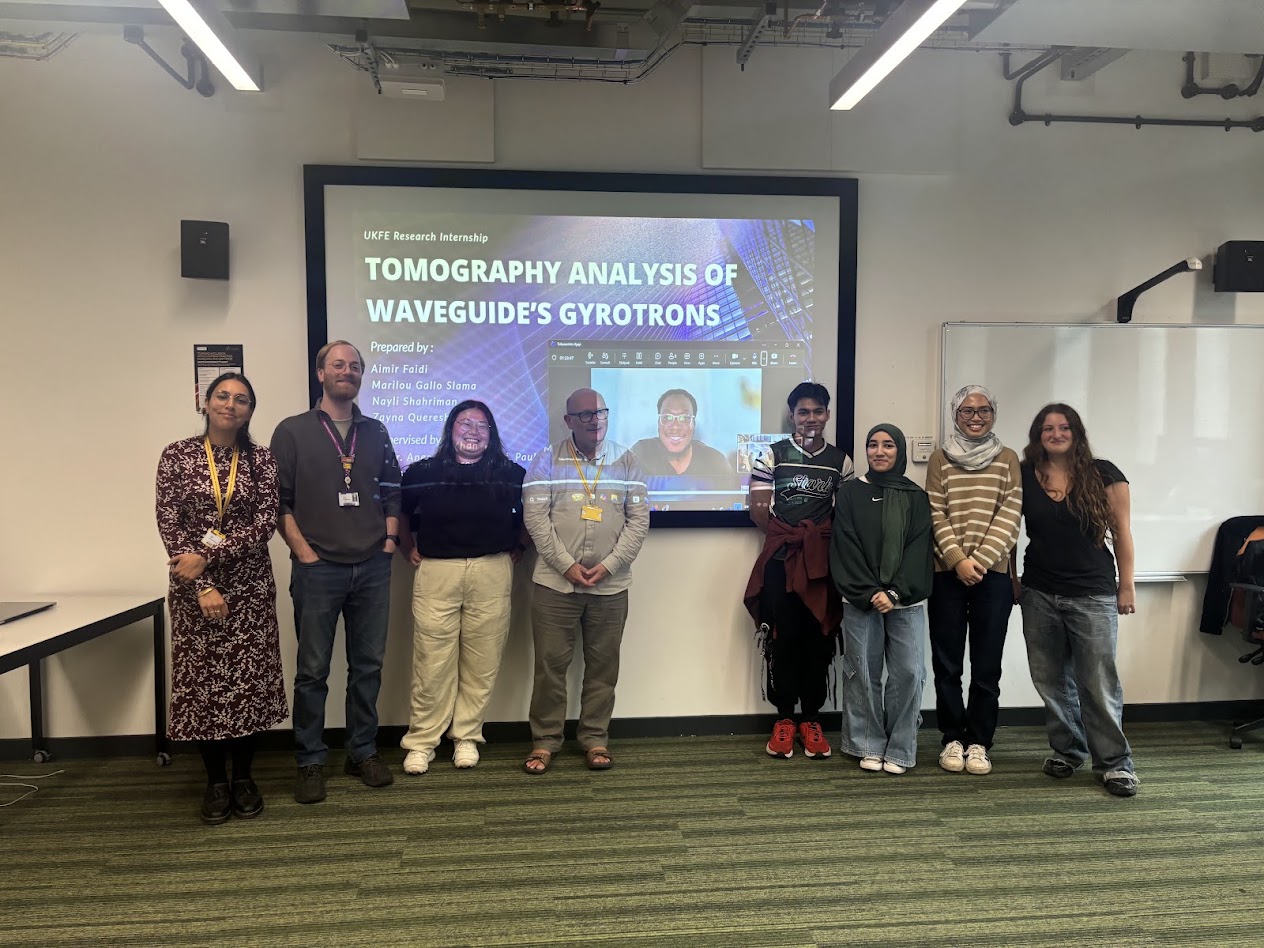
For Chemical Engineering student Aimir Faidi, the project introduced concepts well outside his usual field of study. He was particularly fascinated by the use of electromagnetic waves and remote heating in fusion systems, describing the experience as an opportunity to explore “a new concept” and develop his interest in fusion energy.
Learning new software and tackling unfamiliar concepts was not always straightforward. The interns had to work independently, troubleshoot problems and learn from one another. Marilou reflected that: “It takes patience and troubleshooting, but I think that has been one of the best ways to learn.”
The internship also offered an opportunity to see how the research they were studying connects to real-world technologies. The group visited facilities including the Advanced Manufacturing Research Centre (AMRC), UK Atomic Energy Authority (UKAEA), the Henry Royce Institute at the University of Sheffield, and Tokamak Energy.
For Materials Science graduate Nayli Shahriman, the visits were a particular highlight. With an existing interest in metallurgy, corrosion and advanced materials, she was able to see advanced manufacturing and materials research in practice.
At the AMRC, she saw additive manufacturing and advanced machining techniques, while visits to UKAEA and the Henry Royce Institute provided insight into materials testing, component development and the challenges of manufacturing for demanding applications. Nayli found that: “Seeing how engineers work within a major manufacturing centre and contribute to making UK manufacturing fit for the future was both inspiring and insightful.”
The visit to UKAEA Culham also helped connect the interns’ research with the scale and complexity of fusion technology. Seeing JET (Joint European Torus) in person and watching robots being operated gave Marilou a new perspective on the systems she had been learning about. Marilou found that: “Seeing the diagrams come to life and actually being able to locate the different parts I had studied” made the project feel much more tangible.
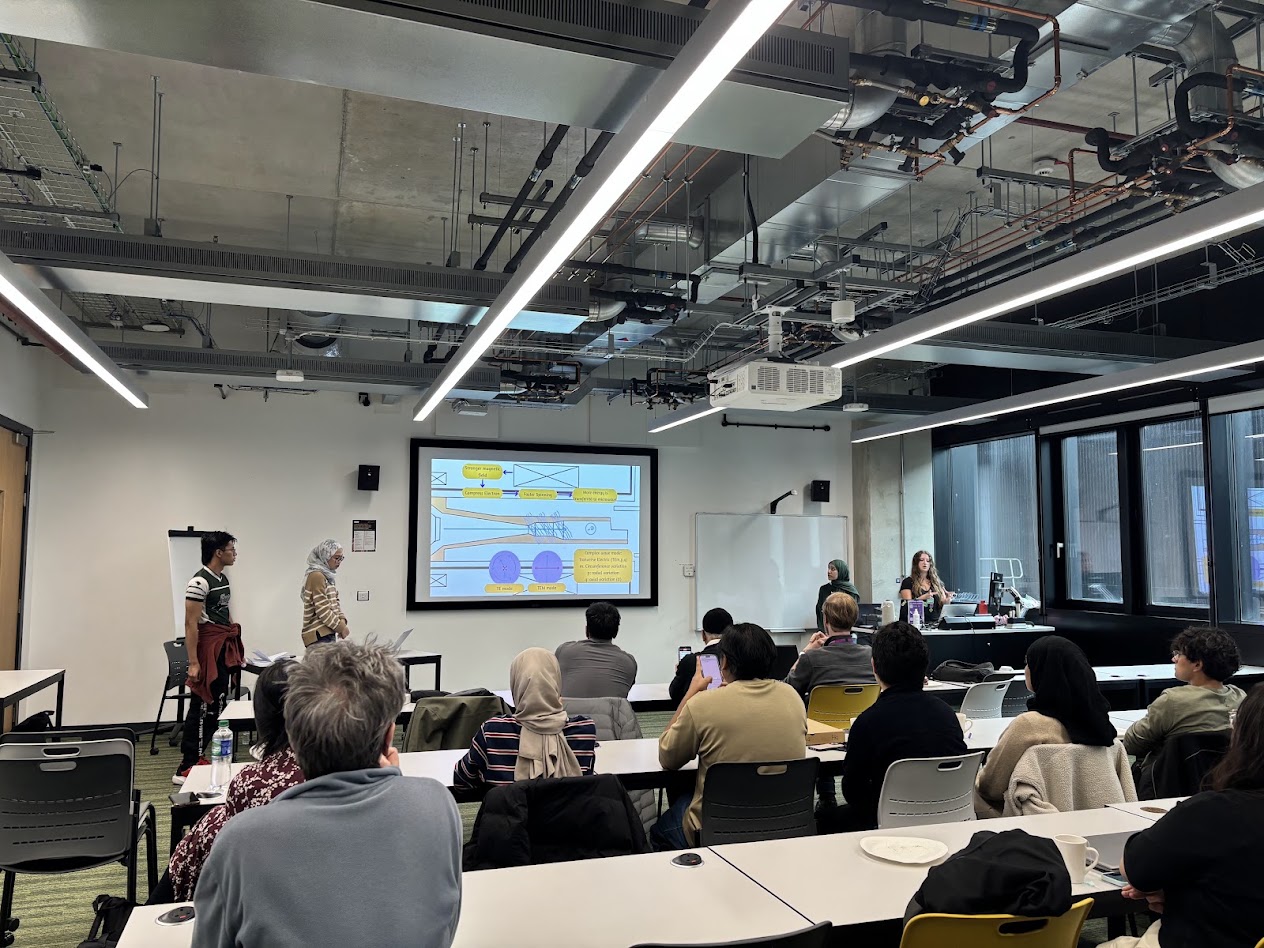
Beyond the technical knowledge and practical experience, the internship gave the four interns an insight into the collaborative nature of fusion research and the range of career opportunities within the sector.
For Zayna, the experience has opened up avenues she had not previously considered. Aimir has been inspired to explore the possibility of a future PhD in fusion materials, while Nayli leaves with a strengthened interest in materials engineering, advanced manufacturing and the energy sector.
For Marilou, an internship that began with little knowledge of fusion has changed her perspective on where her career could take her. “I started the internship not knowing much about fusion, and now I can actually see myself working in this field in the future.”
After eight weeks of research, learning and new experiences, the interns leave with new technical skills, professional connections and a much greater understanding of fusion energy.
As Zayna reflects, “We have learnt so much and yet, somehow, it seems we’ve barely scratched the surface of this boundless subject.”
- Find out more about fusion at the Dalton Nuclear Institute.
These internships were funded by the UKAEA and hosted by Dr. Aneeqa Khan, Prof. Paul Mummery, Dr. Toluwanimi Ajayi, Linyi Hu and Farouq Alatassi.