



04
November
2026
|
11:02
Europe/London
John Rylands Library takes centuries-old Coptic treasures into the heart of the community
More than 400 Coptic Christians examine manuscripts at a Stockport church in rare opportunity to connect with their cultural and religious heritage
3BB315D4-4848-4C24-AB3A-1F5BD0D48FEE
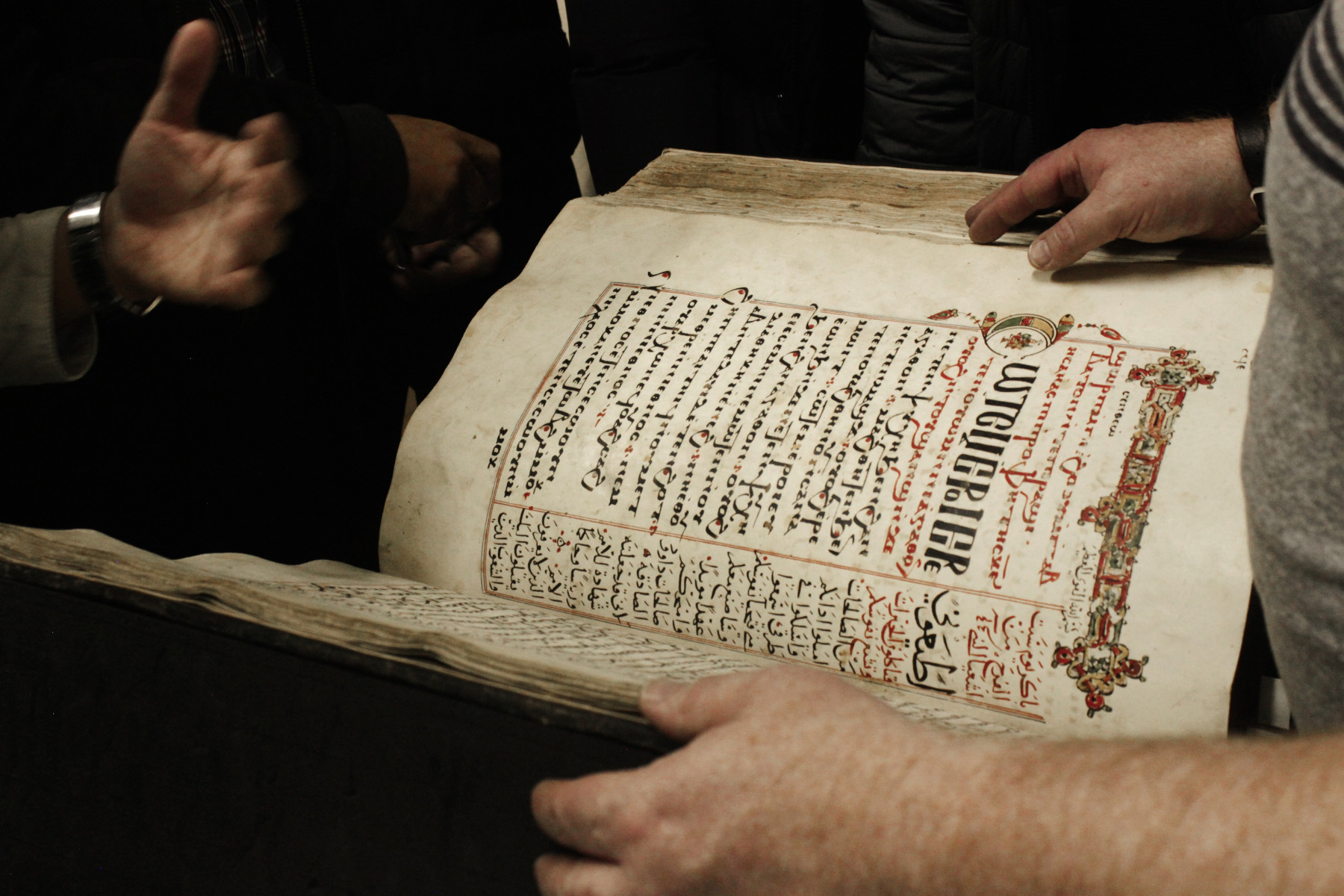
The University of Manchester’s John Rylands Library has taken a selection of its historic Coptic and Ethiopian manuscripts out of the library and into the community, giving hundreds of people the rare opportunity to encounter their heritage first-hand.
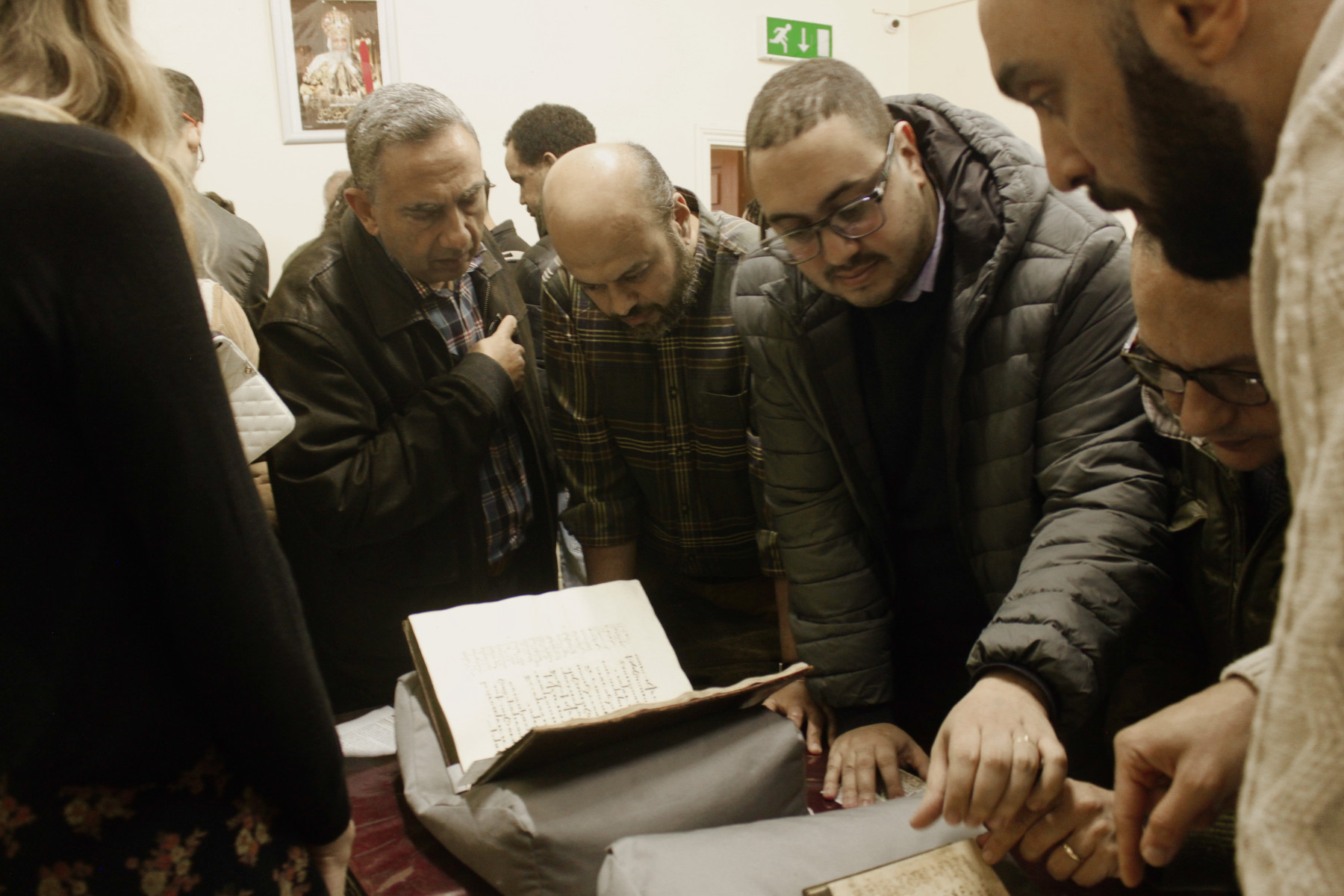
The special exhibition - held on 1 November at St Mary & St Mina Coptic Orthodox Church in Stockport - attracted more than 400 visitors and their children, many of whom travelled from across the UK to see manuscripts dating back as far as the tenth century.
The event brought together curators, academics and members of Greater Manchester’s Coptic community, many of whom had previously had little opportunity to engage directly with the library’s extensive collection of manuscripts written in Coptic - an ancient Egyptian language.
The event was organised by Dr Ibrahim Saweros and Dr Jeremy Penner, and formed part of Coptic in Manchester: Connecting Manuscripts and Communities, a two-year research project led by Dr Sarah Parkhouse at The University of Manchester.
Funded by the Arts and Humanities Research Council (AHRC), part of UK Research and Innovation (UKRI), the project aims to bring manuscript research into conversation with the knowledge and experiences of the communities whose histories are represented in library and museum collections.
Visitors were provided with an exhibition booklet and had the opportunity to speak with the project team about the manuscripts, their history and their significance. The enthusiasm of the congregation - particularly younger visitors - demonstrated the potential for cultural institutions to build meaningful relationships with communities whose heritage they preserve.
For many attendees, the experience was more than an opportunity to see historical artefacts - the manuscripts offered a tangible connection to the language, faith and traditions of previous generations, and a chance to explore how those traditions have evolved over the centuries.
The project hopes that this encounter will be the first of many, as libraries and museums look for new ways to make their collections accessible and relevant to the communities whose histories they hold.
69A44CCC-8FA2-4E1F-8B8C-23B050C854DF
Among the manuscripts on display were biblical texts, Coptic liturgies and a Holy Week lectionary, alongside two parchment manuscripts from Egypt’s White Monastery containing sermons by St Shenoute of Atripe, a hugely influential fifth-century monastic leader.
Visitors were also able to see fragments of an ancient Coptic translation of the Gospel of Matthew, written on papyrus, and an eighteenth-century Ethiopian manuscript recounting the life and miracles of St George.
The encounter offered a rare opportunity to explore these objects in the setting of a living religious community, connecting centuries of written history with traditions that continue to be practised in Greater Manchester today.
“There is something quite remarkable about a manuscript written centuries ago finding itself once again among people who know its prayers, recognise its saints and continue its traditions,” said Dr Jeremy Penner, Senior Curator at the John Rylands Library.
“
These books may belong to the Rylands, but their stories belong to a much larger world. Taking them out of the library and into a Coptic church offered an opportunity not only to share what we know about the manuscripts, but to discover what we might learn when they return, however briefly, to the world from which they came.
Dr Jeremy Penner
„
