



16
November
2026
|
10:46
Europe/London
Rethinking how we manufacture RNA therapeutics
Manchester researchers are developing a scalable, enzyme-driven alternative to conventional oligonucleotide manufacturing, designed to reduce waste and widen access to RNA-based medicines.
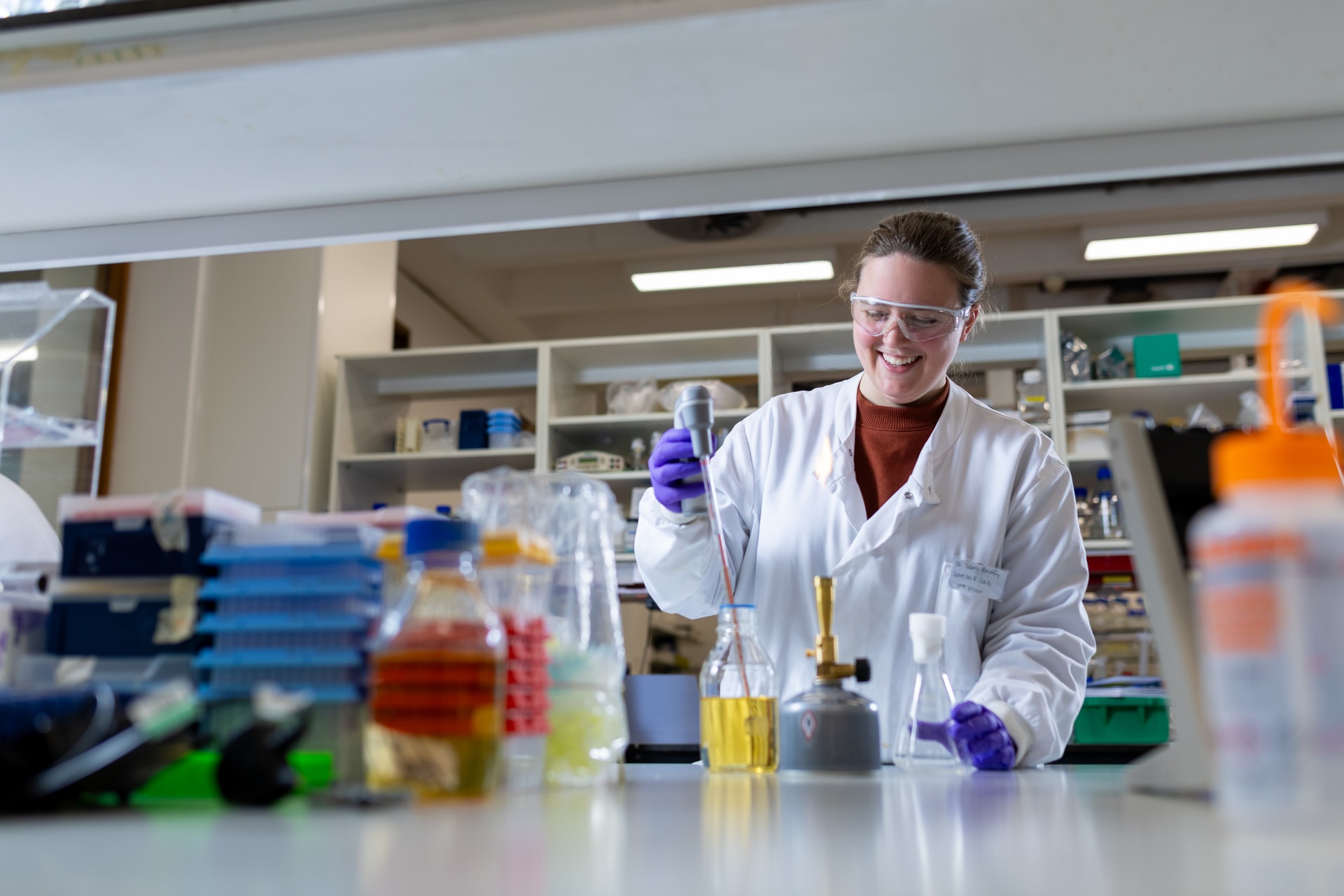
A researcher wearing a white lab coat, safety glasses and purple gloves uses laboratory equipment at a bench surrounded by bottles and containers.
Research at the Manchester Institute of Biotechnology is exploring enzyme-based alternatives to conventional chemical methods for manufacturing therapeutic oligonucleotides.
Summary
- RNA-based medicines could transform treatment across a wide range of diseases.
- Current manufacturing methods come with a substantial resource cost, relying on repeated cycles of chemical synthesis that consume large volumes of solvent and generate significant waste.
- Manchester is exploring whether biology can offer a different route, using enzymes to develop a more scalable and sustainable way to manufacture therapeutic oligonucleotides.
Manufacturing at scale
Therapeutic oligonucleotides control the production of disease related proteins and have the potential to treat a wide range of diseases spanning genetic disorders, cancer, heart disease and viral infections. However manufacturing them at scale remains challenging.
Conventional approaches build oligonucleotides one nucleotide at a time through repeated cycles of chemical synthesis. The process consumes large volumes of solvent, generates substantial waste and is constrained by solid supports or columns better suited to small batches.
Researchers at the Manchester Institute of Biotechnology set out to develop a fundamentally different manufacturing route: using enzymes to produce oligonucleotides efficiently, sustainably and at the scale required for wider pharmaceutical use.
Letting enzymes do the work
The Manchester team developed an enzyme-driven process inspired by DNA replication. Polymerases and endonucleases amplify a specially designed catalytic DNA template, producing large quantities of therapeutic oligonucleotides. In contrast to chemical synthesis, this approach generates the final product in a single operation, using unprotected building blocks and aqueous conditions.
The research has progressed from an academic advancement published in Science (DOI: 10.1126/science.add5892) to an industrial collaboration focused on scale-up and commercialisation, involving CPI, AstraZeneca, Novo Nordisk, BioMarin and Novartis.
If demonstrated at manufacturing scale, the technology could reduce solvent use, waste and production costs, helping remove barriers to wider adoption of oligonucleotide medicines.
“
Therapeutic oligonucleotides have huge potential to treat a wide range of diseases including common disorders such as diabetes, but producing them at the required scale remains challenging. Developing more scalable and sustainable approaches to production will be key to ensuring the widest possible access to this powerful class of therapeutics.
Sarah Lovelock, Professor of Biological Chemistry
„

Visit Professor Sarah Lovelock’s research profile to explore her research into scalable approaches to manufacturing therapeutics.