



Manchester, UK,
19
October
2026
|
08:00
Europe/London
What happens when gardeners become filmmakers?
Ideas at Work explores how humanities research creates change in the world around us. This story follows how filmmaking can operate as a participatory research method to document, evaluate and reshape socially engaged museum practice.
Ideas at Work
Graphic with Ideas at Work and Faculty of Humanities stated on it. A gardener leans over a flower with a camera.
At a glance
Research team
Dr Sophie Everest
Dr Andy Hardman
Keiran Hanson
Dr Catalina Delgado Rojas
Discipline
School of Arts, Languages and Cultures
Department of Drama and Film
Department of Art History and Cultural Practises
Partners
Platt Hall (Manchester Art Galleries)
Friends of Platt Fields
Manchester Urban Diggers
Platt Fields Market Garden
Including:
Liz Mitchell, Platt Hall Lead
Meg Parnell, Garden Project Lead
Mary Collins, garden volunteer and filmmaker
Rashid Mhar, garden volunteer and filmmaker
Helen Steyne, garden volunteer and filmmaker
“
Often this is information that exceeds the capacity of the spoken word to communicate. By paying attention with our cameras, we hope that what we are revealing is a kind of social, emotional, and material connection with the Hall, as well as the more informational, processional elements of the kind of work that's being done there.
Dr Sophie Everest, Senior Lecturer, Drama and Film
„

The question: What happens when gardeners become filmmakers?
Since 2019, Platt Hall has been reimagining its role as a museum, working with locals to create a space designed with, rather than simply for, its community. Sophie Everest and Andy Hardman, researcher-filmmakers from The University of Manchester, have undertaken practice-based research across a range of museum and gallery contexts, embedding filmmaking within engagement, learning, curatorial and evaluation practices.
What began as a collaboration to document Platt Hall's transformation with Dr Everest and Dr Hardman developed into a project that asked: can filmmaking act as a more effective method of museological evaluation that does not just record, but shapes, change?
Ideas at Work
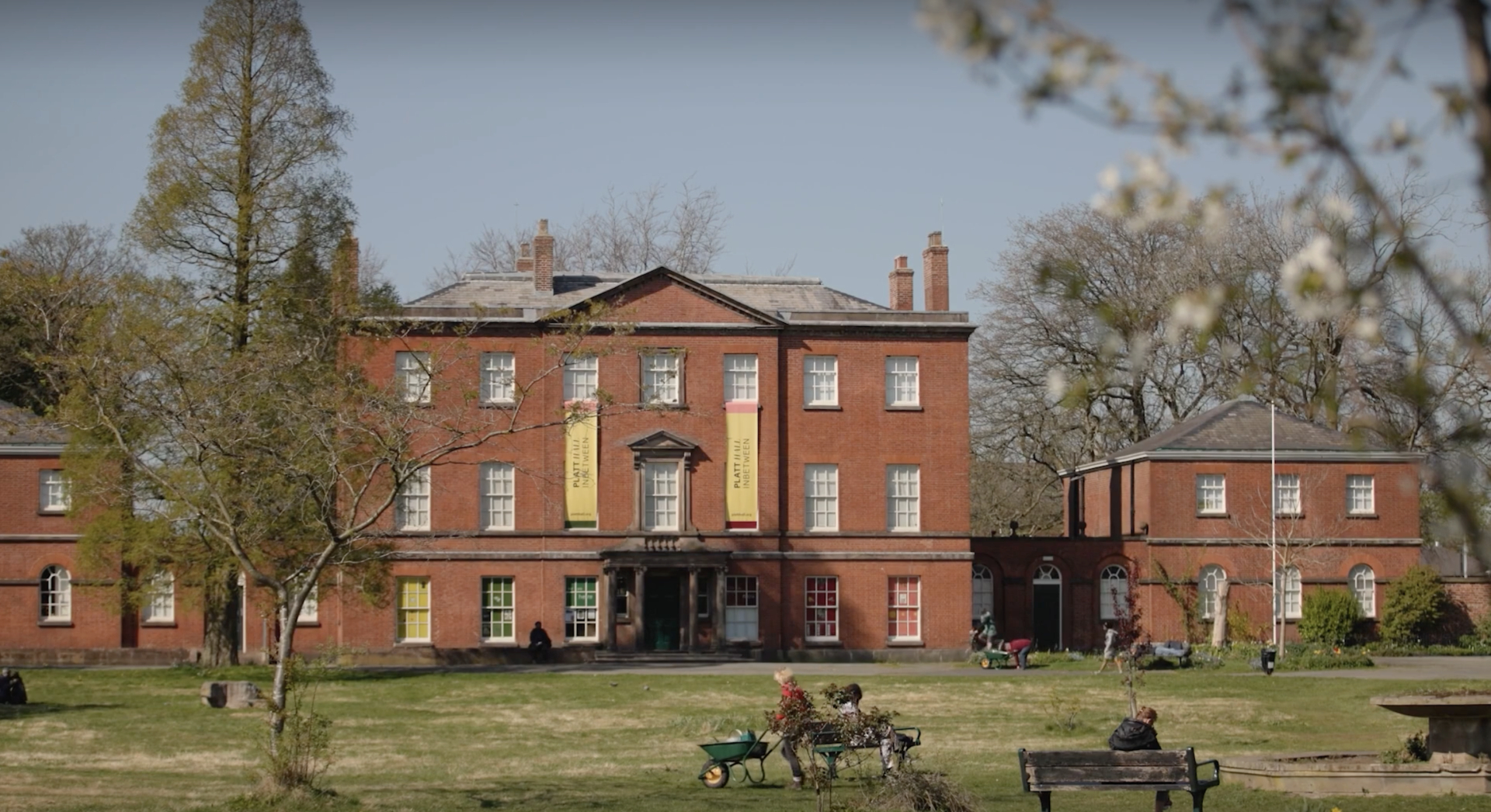
Platt Hall, a lovely red-brick building, with gardeners pushing wheelbarrows in the foreground
The idea
Participants were involved in filmmaking over an extended period, starting with observational filming of activities, long and short-form interviews and public screenings. The project then evolved into three films co-produced with volunteers from The Garden Project, following work to transform the Hall’s disused exterior into a green, community space.
What makes the co-production method distinctive is that film is not simply used to document outcomes. Filmmaking is a collaborative and socially engaged act, requiring participants to pause and evaluate at each stage of planning, directing, camera work, editing, reviewing, and screening.
This intentional, slow process creates repeated opportunities for participants to reflect on their perspectives, relationships, and sense of place, and capture how they change over time, even when these changes might exceed the written word. The result is an approach in which evaluation is more than a final reporting function, but an embedded part of the project itself, creating space for learnings to be identified and applied as the work develops.
The collaboration
Located at the crossroad of the South Manchester neighbourhoods of Rusholme, Fallowfield and Moss Side, Platt Hall was the Gallery of Costume until 2017. Since 2019, it has been undergoing a transformative redevelopment as part of the Platt Hall Inbetween project, funded by the Esmée Fairbairn Collections Fund and Paul Hamlyn Foundation.
As part of this work, The Garden Project was launched in 2021. Manchester Urban Diggers (MUD) and Platt Fields Market Garden provided the start-up design, which has since been implemented by volunteers in partnership with Friends of Platt Fields. The result is a shared space that is enjoyed both by individuals and community groups, including Stay & Play families, Health & Wellbeing participants, local primary schools, and ESOL groups.
Working with Keiran Hanson, Lecturer in Film Practice at The University of Manchester, gardeners learned narrative techniques, how to direct the camera, and editing skills. The results were three co-produced films:
- A Tale of Healing, Inspiration & Biscuit Diversity in the Platt Hall Garden Project by Mary Collins: An exploration of Mary’s journey of growth whilst volunteering in the garden and how the project helped her reconnect with others amidst personal struggles.
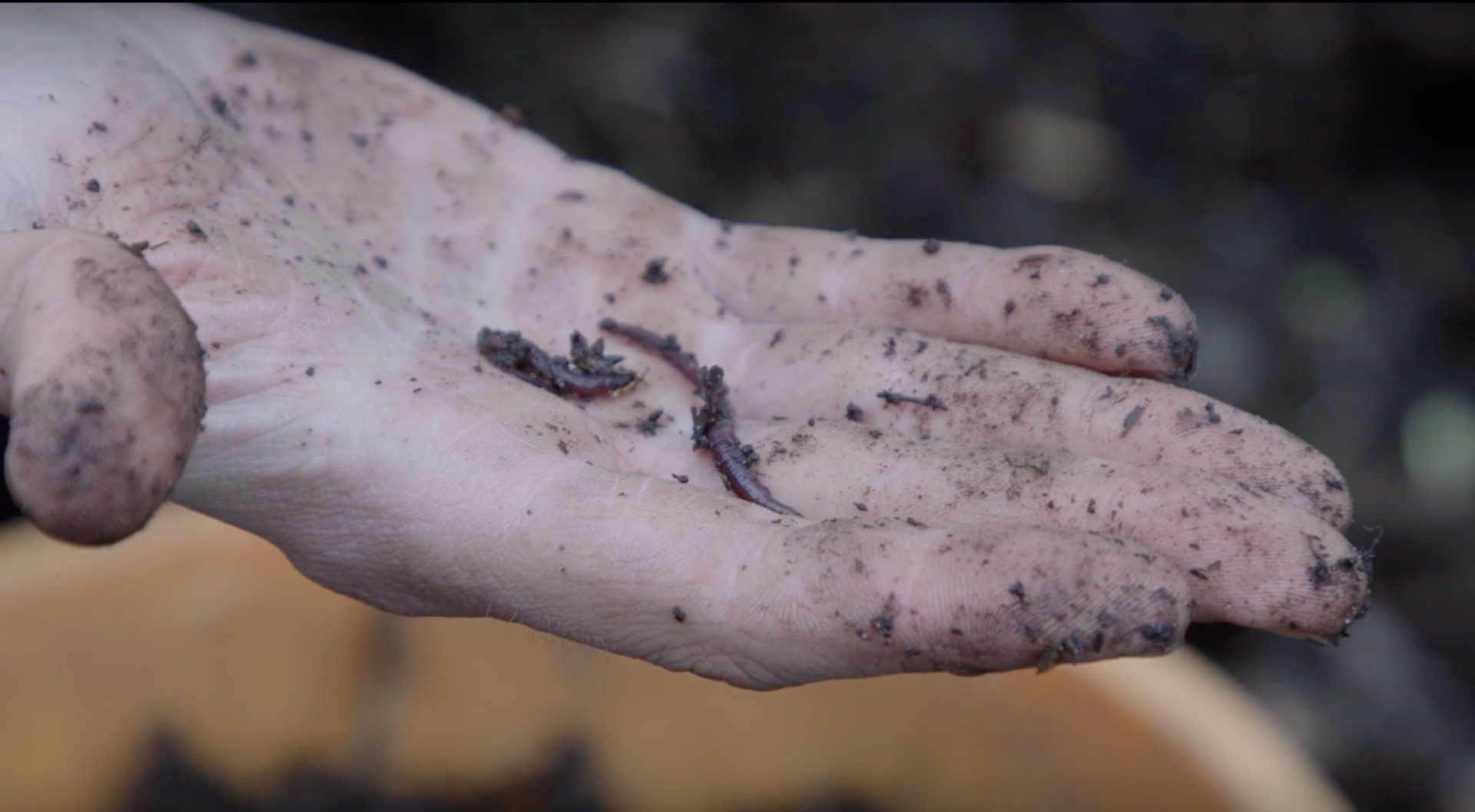
- Compost by Rashid Mhar: A deep dive into the lifecycle of compost, from its beginning through to decomposition and renewal as vital garden sustenance. This lifecycle acts as a parallel to the transformation occurring at Platt Hall.
- The Pleasure of the Work by Helen Steyne: A fascinating catalogue of the before and after work completed on the garden, as well as the community who helped shape it.
All films can be watched here. This research was funded by UK Research and Innovation (UKRI).
Ideas at Work
A muddy hand holds out a worm
From research to impact
The research has two core strands that provided routes to impact:
For Platt Hall, the co-produced films supported its shift towards becoming a community-first institution by placing volunteers, neighbourhood groups, and other local voices at the centre of how the museum understands and presents its work.
For museological research and the wider heritage sector, the project is a proof-of-concept that demonstrates how filmmaking can be an effective method of capturing a broader range of reflections and learnings over time.
The difference it made
In their words
“
There are certain things that [films] can record and also disseminate that show how and why people participate in community projects. Co-producing film with people can be a way of demonstrating the depth of that participation, as well as trying to evaluate and reflect on the social values of that.
Dr Andy Hardman, Head of the Department of Art History and Cultural Practices
[Filmmaking] shifts your whole kind of notion of what evaluation is for. It's a kind of truism that evaluation shouldn't be after the event. Evaluation should be built into all our projects, but with the best will in the world, when time is limited and resources limited, often evaluation does get a little bit left behind and ends up being something you do at the end to satisfy a particular function.
I think that the creative film making process that we've done here is so embedded in what we do that it's sometimes hard to differentiate what's the project, and what's the evaluation of the project – and the evaluation of the project actually becomes the project [...] and it's all part of our learning.
Dr Liz Mitchell, Platt Hall Lead
It’s been a great mirror to think about the garden and the hall and the activities we’re doing there. There’s a lot which you don’t pay attention to because you’re just there to do some gardening and eat biscuits, so you are paying attention but you’re not thinking about it. So, it’s been a great opportunity to really reflect on it.
Rashid, garden volunteer
„
By the numbers
5 years of collaborative research. Over 50 screening attendees. 3 co-produced films: https://www.platthall.org/projects/thegardenproject
What next?
This project is just one part of an ongoing partnership between researchers and Platt Hall and the wider Manchester Art Galleries portfolio. Building on this work, future and wider research questions may include:
- How can collaborative filmmaking be embedded as a sustainable evaluation methodology within the wider cultural sector?
- What are the limits, risks and ethical challenges of using film as a method of evaluation and shared research within a consultative process of institutional change?
- What wider value does filmmaking hold as a method of documenting and generating the dynamic social relations between people, practice, collections and place that occur in museums and heritage spaces?
Dr Andy Hardman discusses the impact of the partnership with Platt Hall
download
Ideas at Work
Spaces such as Platt Hall play an important role in shaping people’s cultural experiences of the city. This work shows how humanities research methods, including filmmaking, can help make the social value of these spaces visible by centring local voices, capturing reflection as it happens, and deepening our understanding of how – and why – people participate in cultural and community-led projects.