

Viable AI for Organisational Impact
Catalysing AI innovation projects for strategic impact in complex organisations.
Viable AI for Organisational Impact
Structure: A practice-driven programme where you develop viable AI proposals aligned with business strategy and funding criteria, ready for application.
Duration: 8 weeks
Time commitment: 50 hours
Delivery: Online, asynchronous with live moderation
Outcome: Funded, scalable AI proposals aligned with R&D strategy

AI Scaling Challenges in Complex Organisations
Efforts to scale AI are often constrained by structural and operational limitations.
Key questions in AI scalability include:
- Are teams adapting quickly or are legacy systems and fragmented workflows slowing progress?
- Are misaligned priorities and silos preventing initiatives from reaching production?
- Is the necessary talent, systems, and investment in place to scale AI effectively?
- What’s preventing AI initiatives from progressing beyond the pilot stage?
The scale of these challenges in the pharmaceutical sector
- Only 13% of pharma leaders feel "very prepared" to implement AI across digital products and services (PharmaTimes Magazine, Sept 2025).
- 42% of pharmaceutical organisations abandoned most AI projects in early 2025 due to cost, infrastructure and integration barriers (PharmaTimes, Sept 2025).
- £9 billion invested in UK pharma R&D, yet scaling AI remains uneven across the sector (ABPI).
A Programme Built For Impact
Programme Overview
This 8-week programme is a strategic collaboration between The University of Manchester and your organisation, specifically designed for AI and data science professionals in Research and Development (R&D) within large, complex organisations. It will enable you to deliver high-impact, end-to-end AI proposals by collaborating with your peers, breaking down siloes and aligning your technical expertise to design measurable impact across your organisation.

Collaborative by design.
Break siloes and foster cross-functional alignment to accelerate progress beyond the pilot stage.

Grounded in interdisciplinary research.
Combine academic rigour with real-world industry insights to ensure proposals are viable and relevant.

Access to learning expertise.
Learn from cutting edge researchers and domain-leading academics.

Introduction to key concepts in AI.
Explore human factors and implementation strategies needed for digital transformation.

Built for co-creation and iteration.
Use dedicated time and space to explore, innovate and iterate ideas, moving from isolated initiatives to scalable, production-ready proposals.

Tied directly to business outcomes.
Tie your proposal to measurable business impact, ensuring investment translates into sustained transformation.

Programme Details
Learn how Viable AI for Organisational Impact is structured and what it covers - from collaborative design of AI proposals, to expert-led guidance and real-world application.
Aligned with your organisation’s commitment to funding strategic AI initiatives, this programme is backed by your organisation’s senior leadership and led by The University of Manchester. It provides the structure, support, and momentum needed to turn promising ideas into viable and actionable proposals.
Throughout the programme, you will:
- Collaborate with colleagues driving innovation and technical experimentation within your organisation to co-create AI innovations that will help to drive measurable business impact.
- Be guided by leading researchers from The University of Manchester, renowned for its excellence in AI and data science, who will help you ground your proposals in the latest academic thinking and practical insight.
By the end of the programme, you’ll present your proposal to internal decision-makers and cutting-edge researchers in the field.
Selected proposals will receive funding and implementation support, giving you the opportunity to elevate your profile and contribute to building an organisation powered by aligned, end-to-end AI innovation.
Over the course of the programme, you will:
- Explore AI-enabled change across new initiatives, existing systems, and future preparedness.
- Collaborate with peers to identify and co-design impactful applications of AI.
- Review and analyse case studies from our cutting-edge research, learning from both successful and failed implementations.
- Reflect on change management strategies to navigate organisational development.
- Present and refine proposals with feedback from internal stakeholders and external experts.
- Address governance challenges including explainability, data quality, uncertainty, and human factors.
You will co-design innovative AI proposals for application in R&D through applied, practice-driven learning, working in partnership with academics and researchers. These proposals will reflect organisational priorities, and stakeholder needs and be developed in a form that supports real-world implementation.
The programme is designed to meet the needs of large organisations by offering flexible delivery options:
- Fully asynchronous access allows you to engage with content flexibly, minimising disruption to work commitments while maintaining high levels of engagement and learning outcomes.
- Scheduled live moderation sessions are communicated in advance, giving you the opportunity to participate in real-time interaction.
Built by Experts, Shaped by Collaboration
Meet our team of academics
This idea-to-impact programme has been co-created by a multidisciplinary team of leading researchers and scholars in AI, ML and Digital Health.
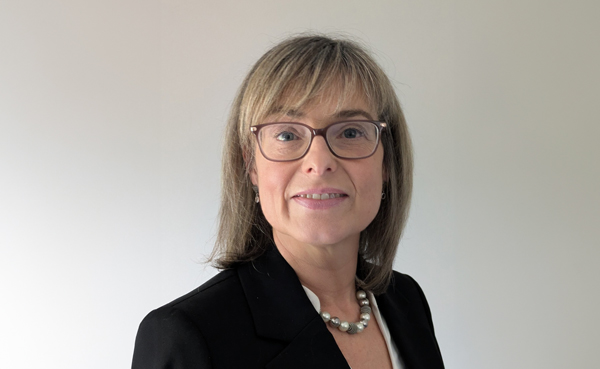
Frances Hooley
Senior Lecturer in Digital Health Education
Specialism: I specialise in empowering healthcare professionals with digital and data science skills, driving the digital transformation of healthcare. My work includes co-designing and delivering a variety of innovative courses to create impactful and sustainable education, providing real value to both learners and their professional environments.
I aim to equip participants with the skills and confidence to develop practice-driven AI proposals through a supportive, applied learning environment. The course is tailored to align with participant needs and organisational strategy, resulting in tested proposals reviewed by stakeholders and cross-disciplinary experts.
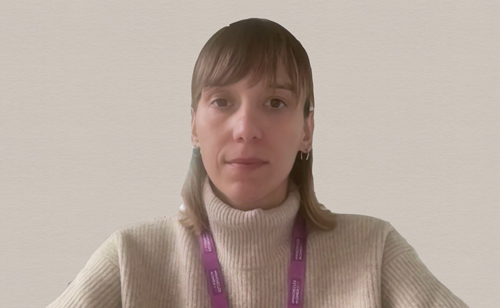
Sokratia Georgaka
Lecturer in Artificial Intelligence for Healthcare
Specialism: My research focuses on developing machine learning methods for the integrative analysis of multimodal biological data. I am particularly interested in spatial omics, and in building multimodal models trained on large-scale spatial omics and imaging datasets to enable the prediction of costly spatial omics modalities from inexpensive histology images.
My aim is to share my experience in developing machine learning models for biomedical data and to inspire participants to think creatively and beyond conventional boundaries.
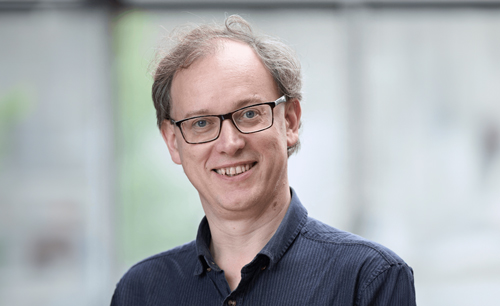
Mark Johnson
Senior Lecturer - Centre for Occupational and Environmental Health
Specialism: I am an expert in complexity science (cybernetics) and technology with an interdisciplinary background. My experience includes co-inventing an AI solution to the diagnosis of Diabetic Retinopathy (and co-founding a startup), using cybernetic theory to create novel organisational interventions in technology implementation and digitalisation, and in strategic implementation research in occupational health and education. My first degree was in music, which remains the most complex system I know.
I think the key learning message of the programme is that the route to optimal design and viable AI implementation comes from understanding and working with the whole system. This is a unique programme which not only provides participants with tools for inspecting their own AI developments in the context of the organisation, but with the opportunity to make organisational interventions in the light of their development and insight.
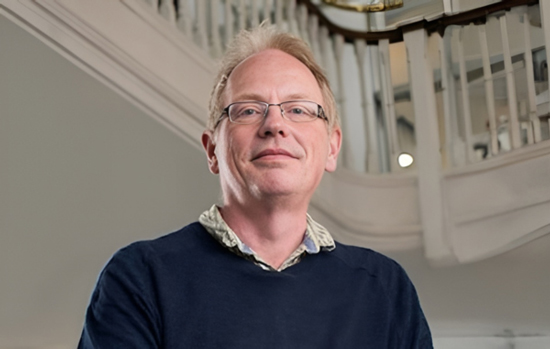
Andrew Brass
Professor of Bioinformatics, Vice Dean and Head of the School of Health Sciences
The University of Manchester Excellence

World-leading department for computer science
One of the UK’s oldest departments, pioneering innovations from the world’s first stored-program computer to the Turing Test.

AI at Manchester
It began here, with Turing’s seminal paper on AI. Today, we’re designing AI that tackles global challenges and transforms lives.

Data Science
Our multidisciplinary approach to data science, supported by world-class facilities, integrates the full research lifecycle, linking theory to real-world applications in areas like bio-health informatics.

Global recognition
Our University has been ranked the 50th most powerful global university brand in the Times Higher Education World Reputation Rankings 2025.